What are Chinese Snuff Bottles?
Snuff bottles are small, handheld containers traditionally used to store snuff, a finely dried and powdered tobacco blended with aromatic herbs and spices. In China, they developed into highly refined objects that combined practicality with artistry, craftsmanship, and personal identity. Carried on the person and handled frequently, snuff bottles were designed to be tactile, durable, and visually engaging from all angles.
Beyond their functional role, snuff bottles became vehicles for artistic expression, reflecting the owner’s taste, status, and cultural literacy. Materials, forms, and decoration were carefully chosen, and many bottles were commissioned, gifted, or collected with discernment. This page introduces the major categories of snuff bottles based on material and technique. Their historical evolution and broader cultural context are explored in greater depth on our Snuff Bottle History page.
A special thanks to our collectors and dealers who graciously provided the snuff bottle images for this page.
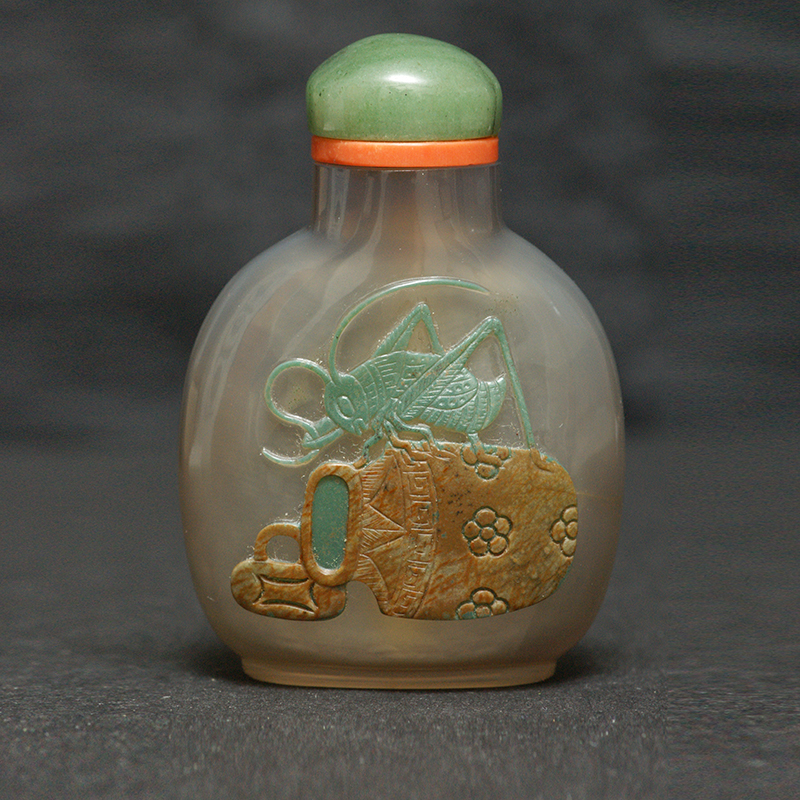
Jade
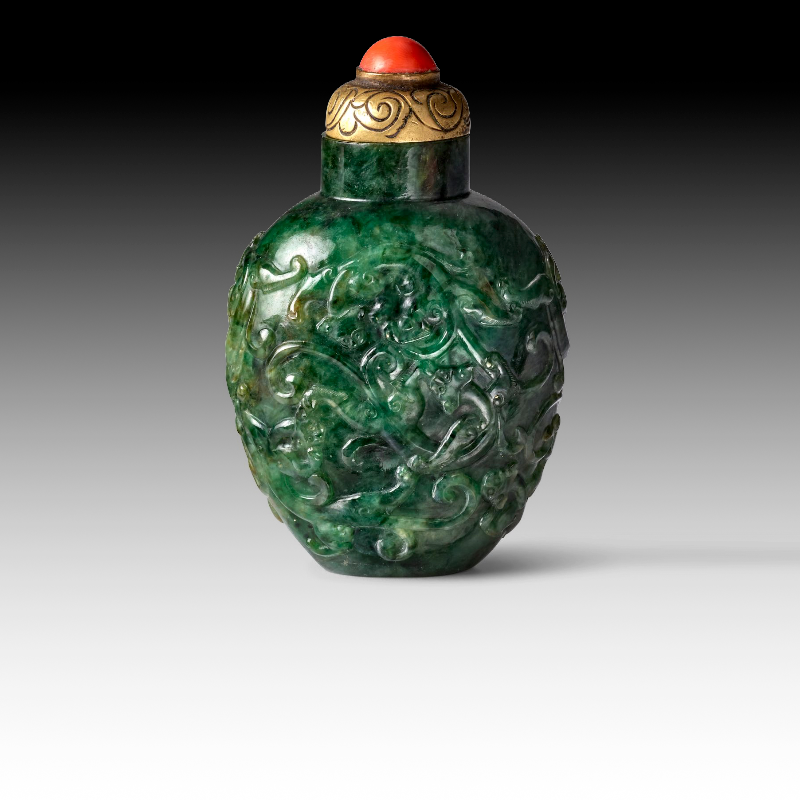
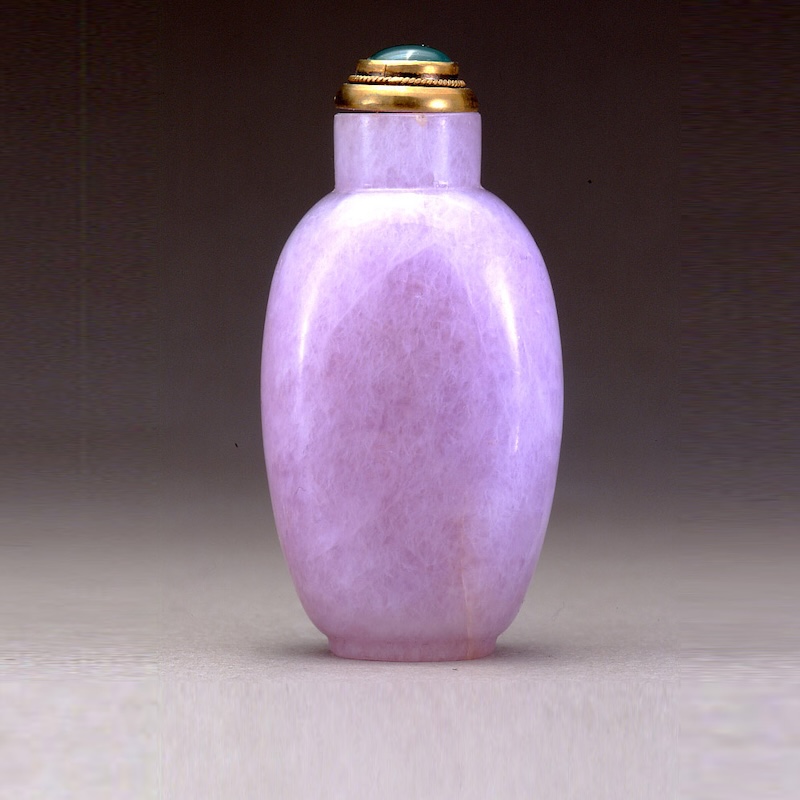
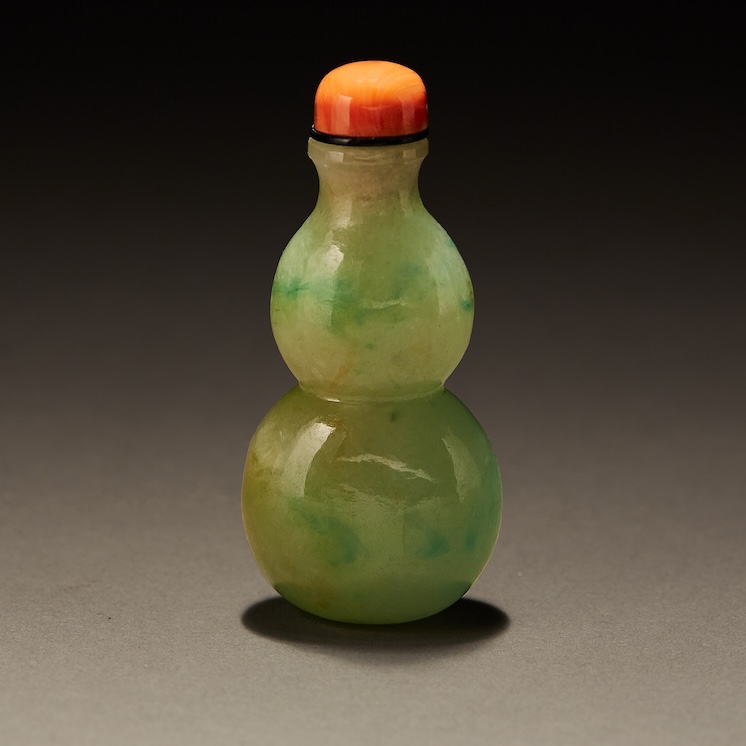
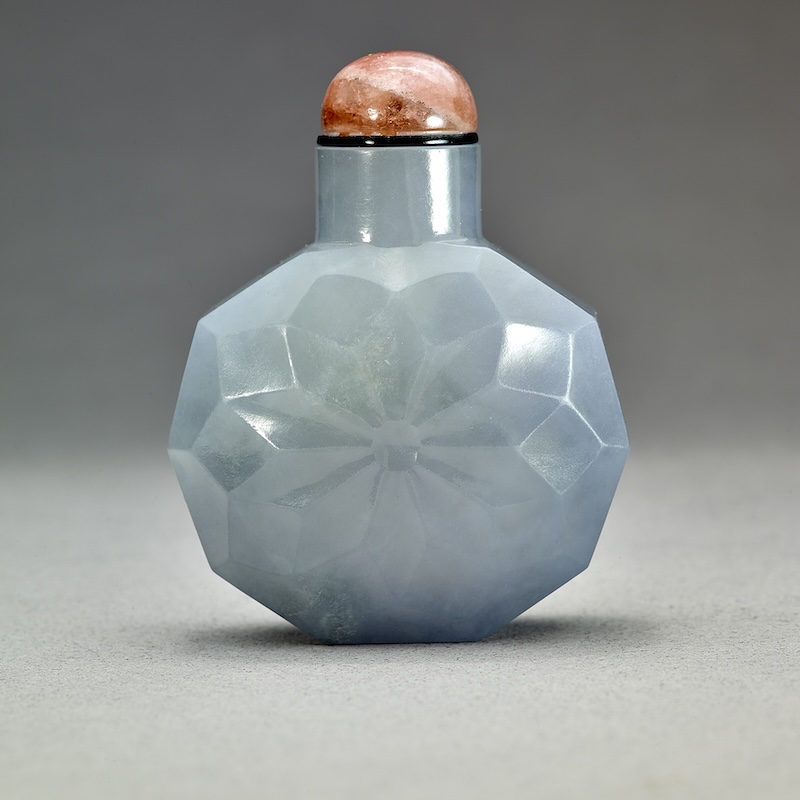
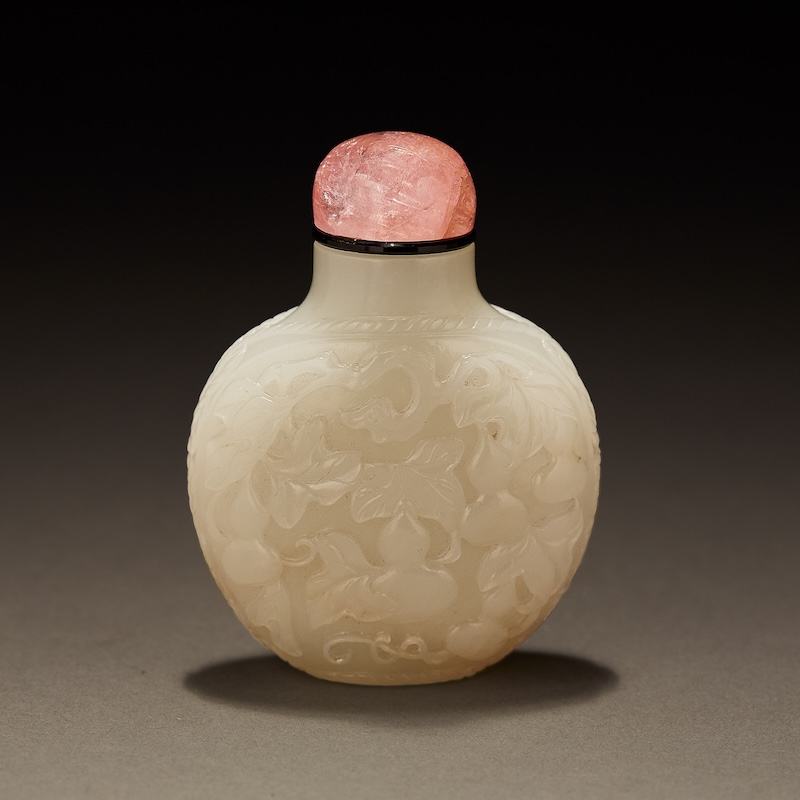
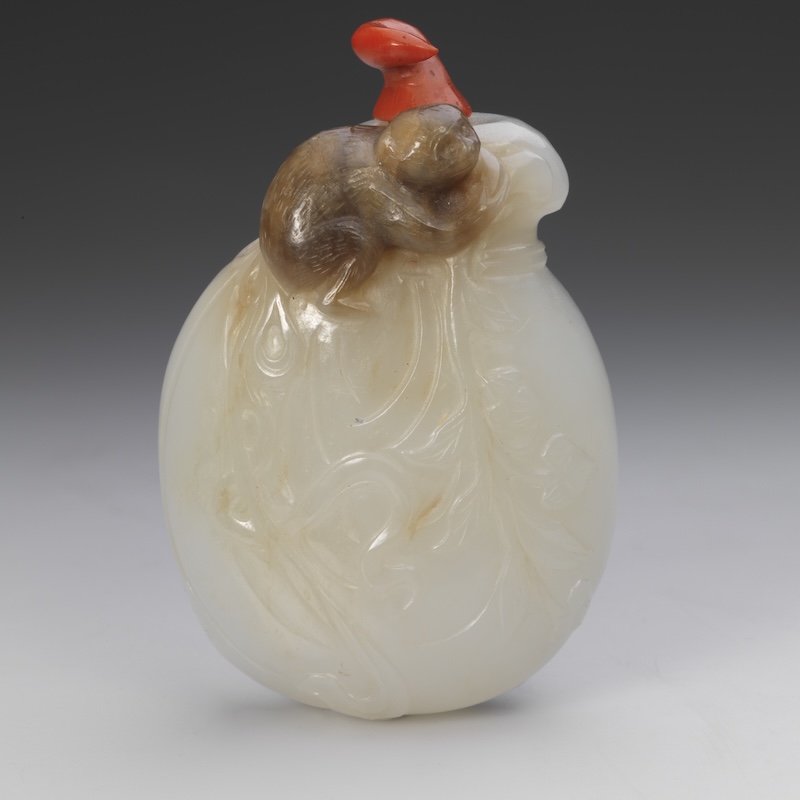
Carving can range from minimal shaping that highlights the stone itself to complex relief decoration. In many cases, natural features of the material—veins, inclusions, or color transitions—are intentionally incorporated into the design.
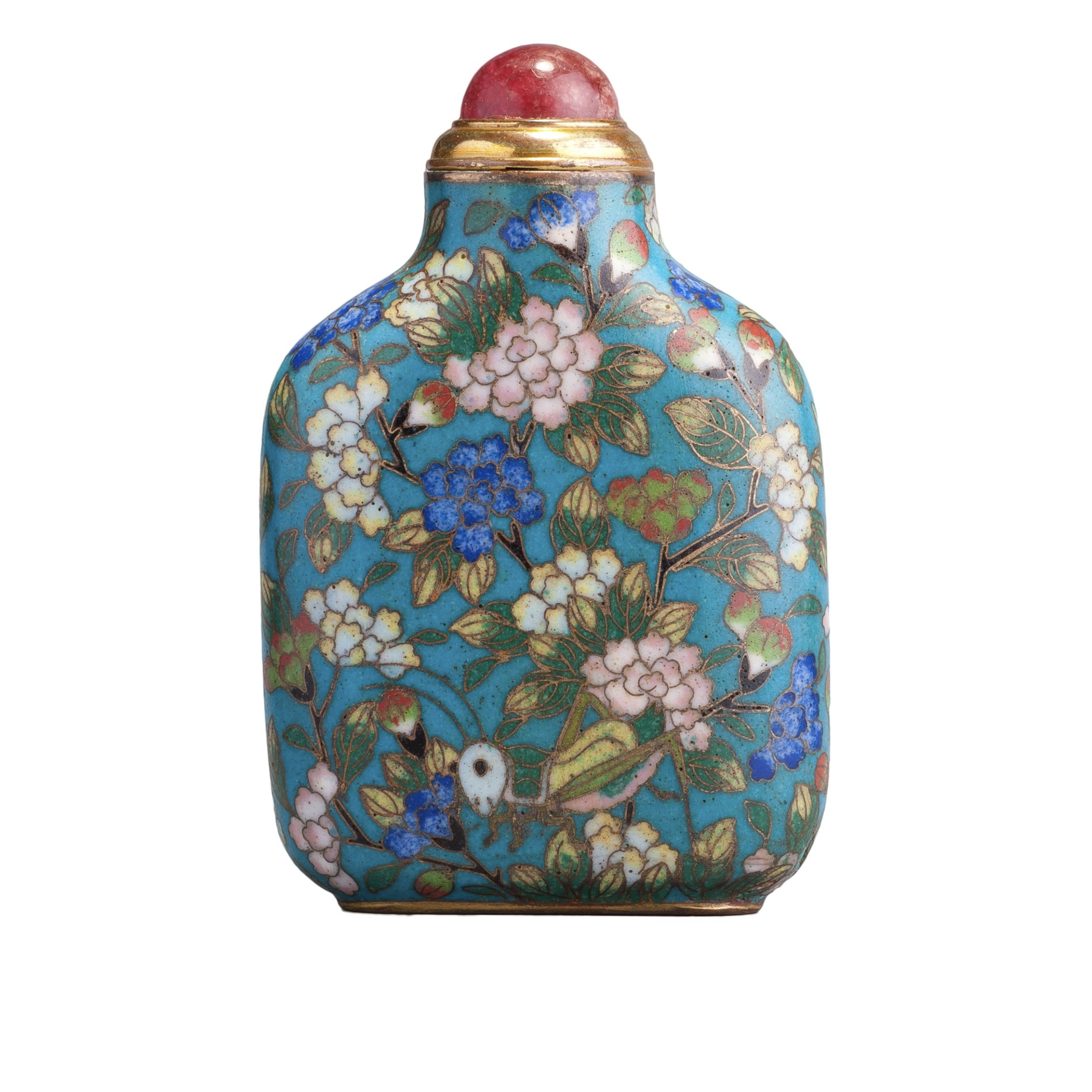
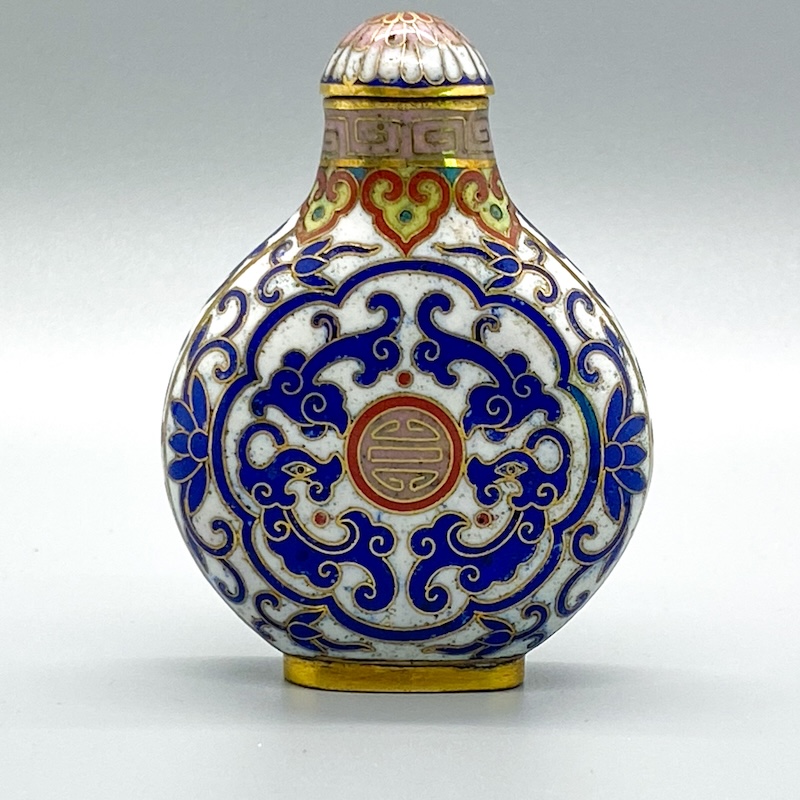
Enamel
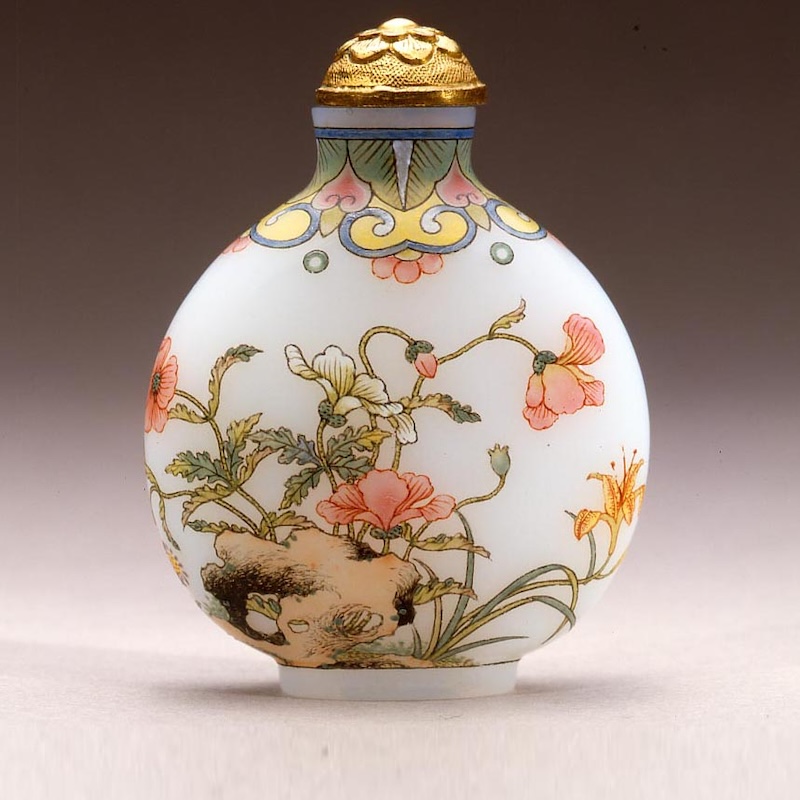
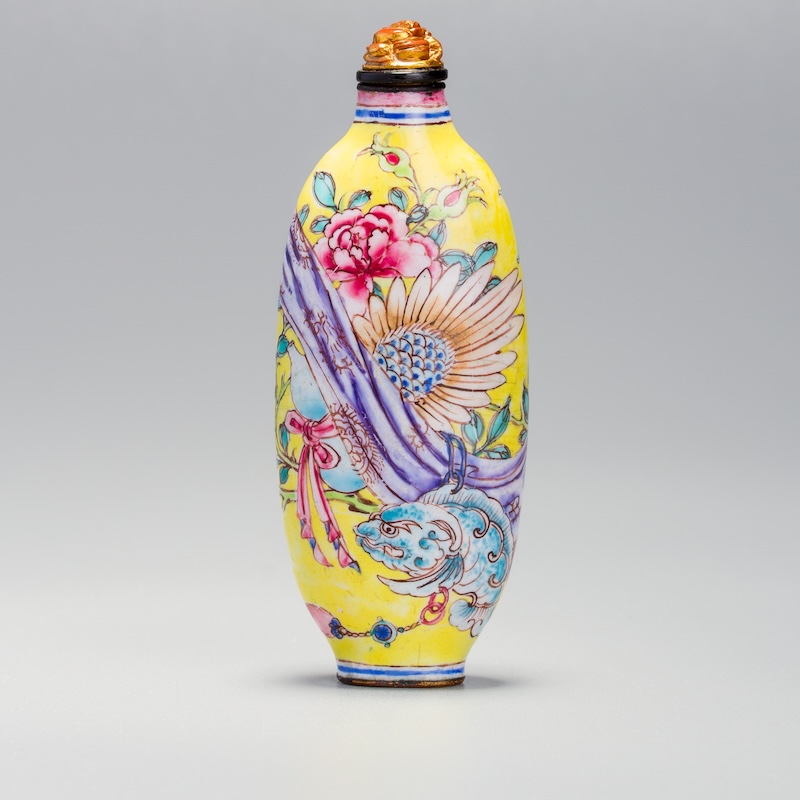
Enamel bottles often balance painterly finesse with durability, making them both visually rich and functionally robust.

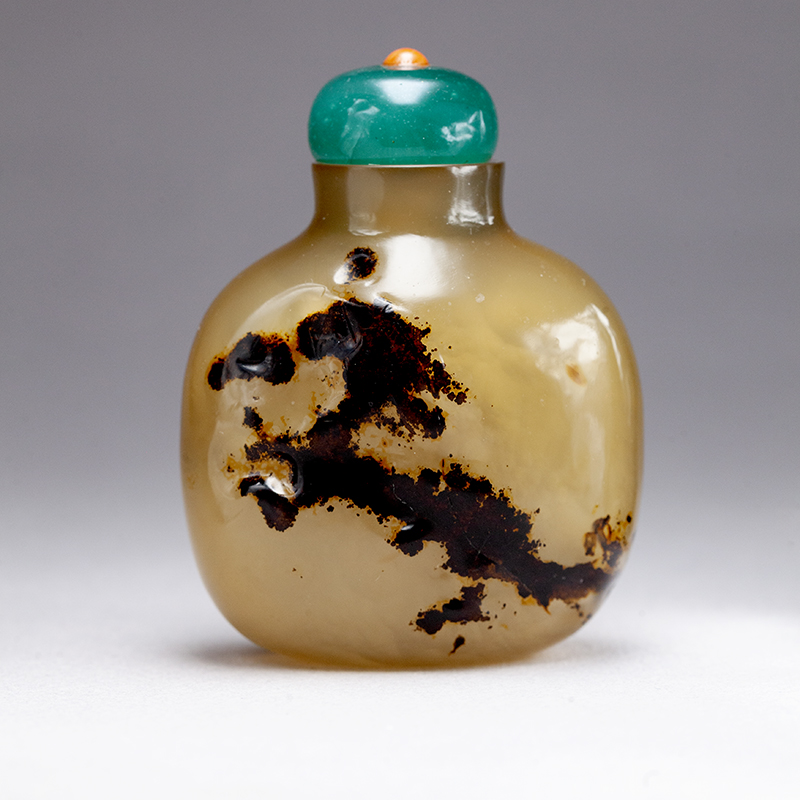
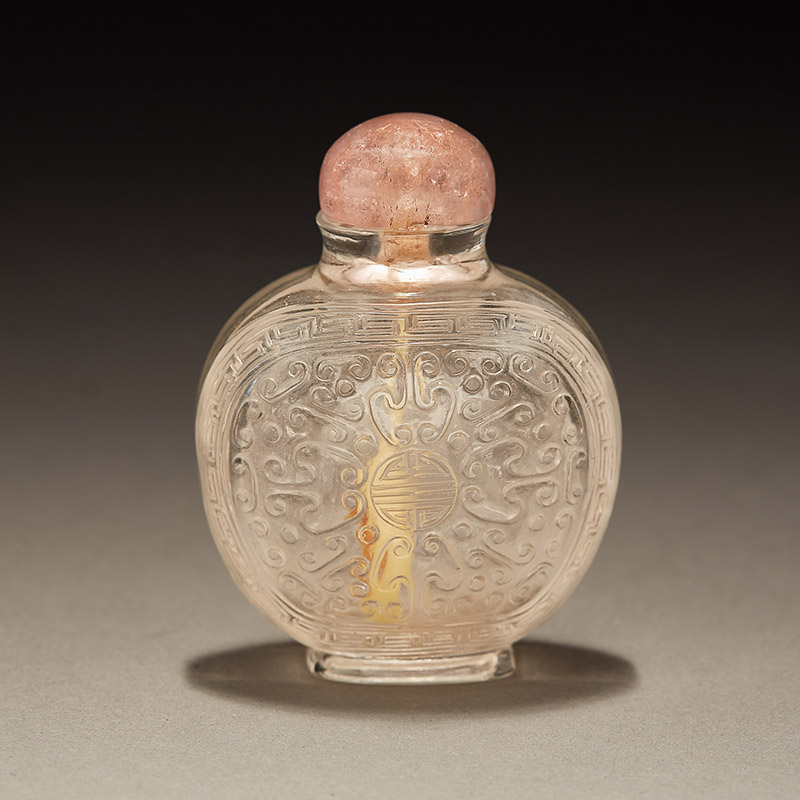
Quartz
These bottles often demonstrate a close dialogue between natural formation and human intervention. Carving is typically conservative, allowing the stone’s internal structure and coloration to remain the dominant visual element.

.jpgPVLN.jpg)
Glass
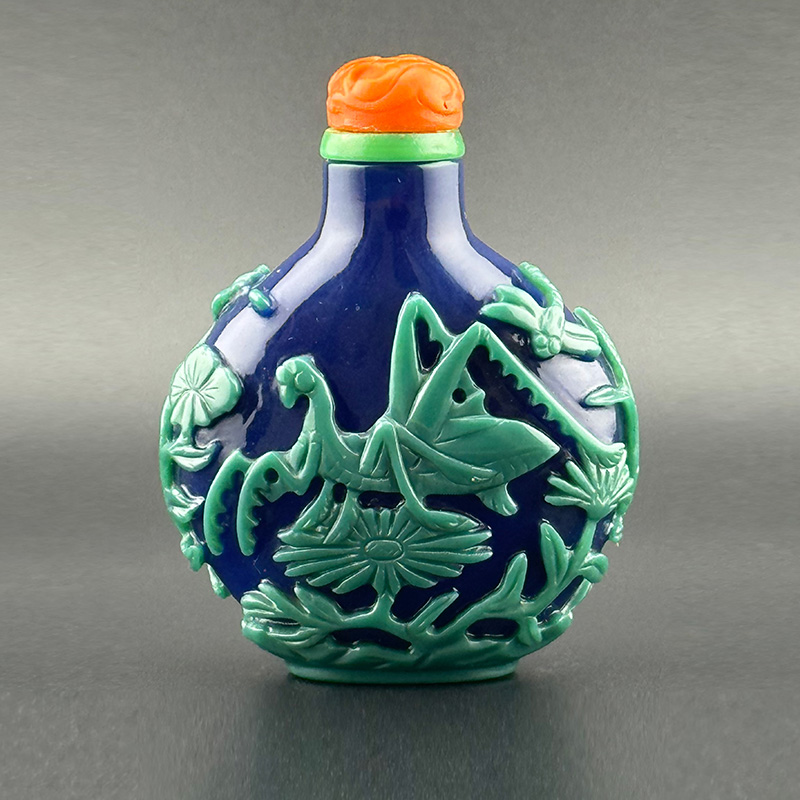
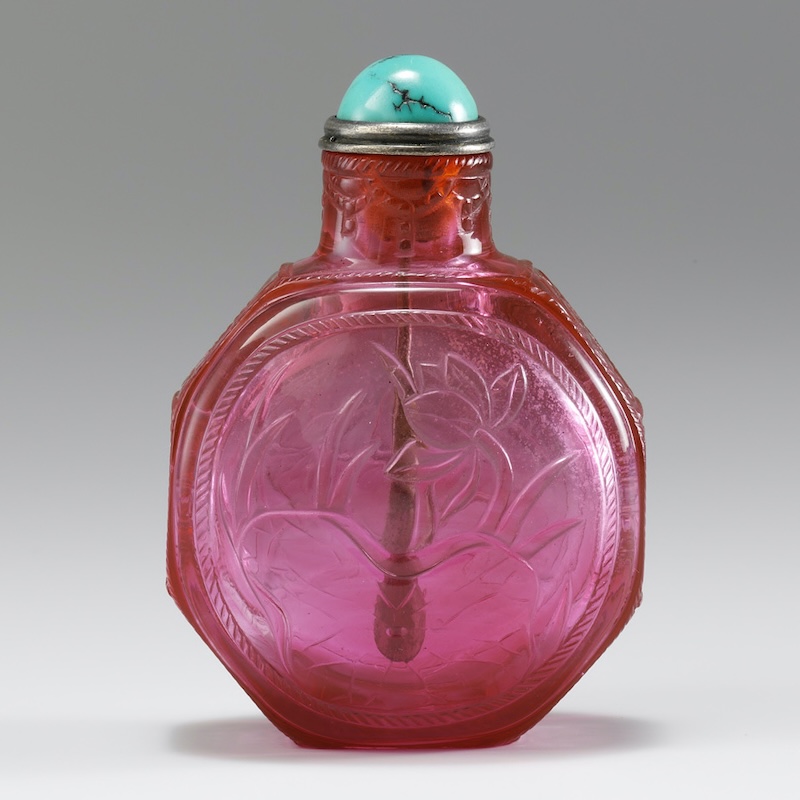
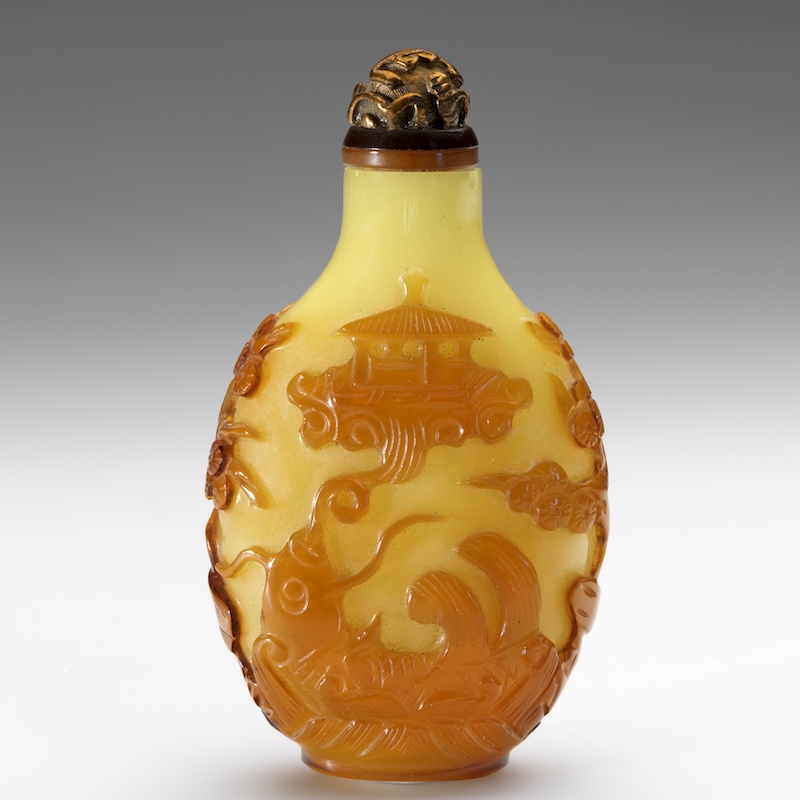
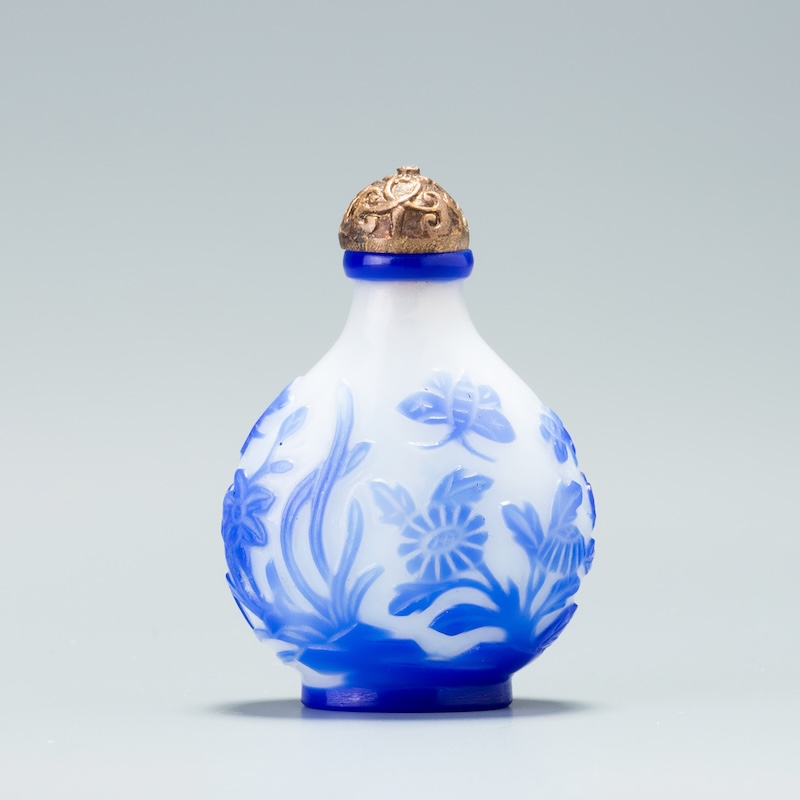
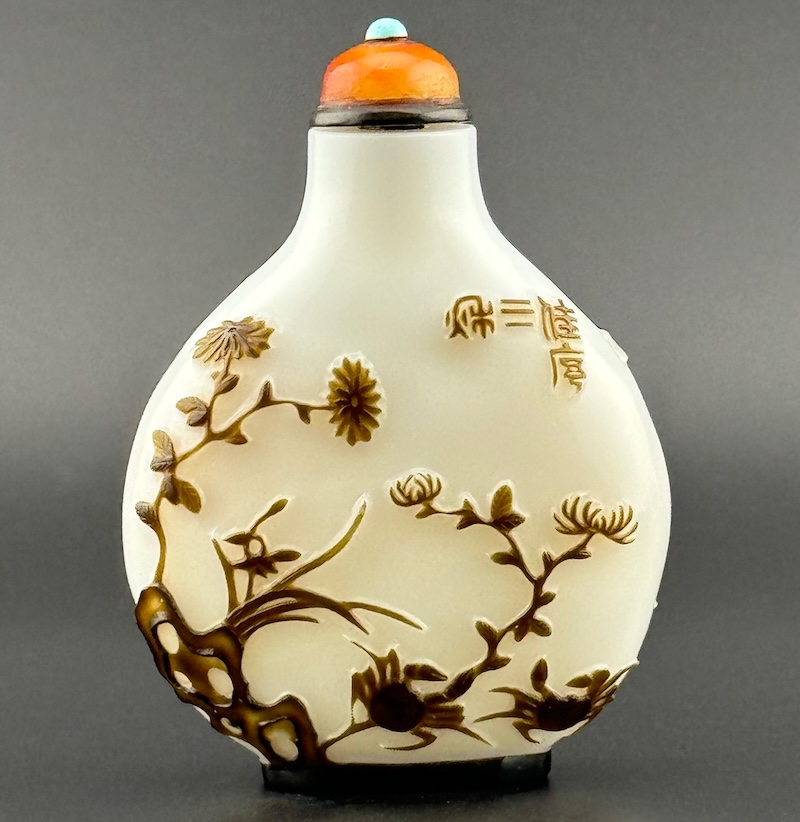
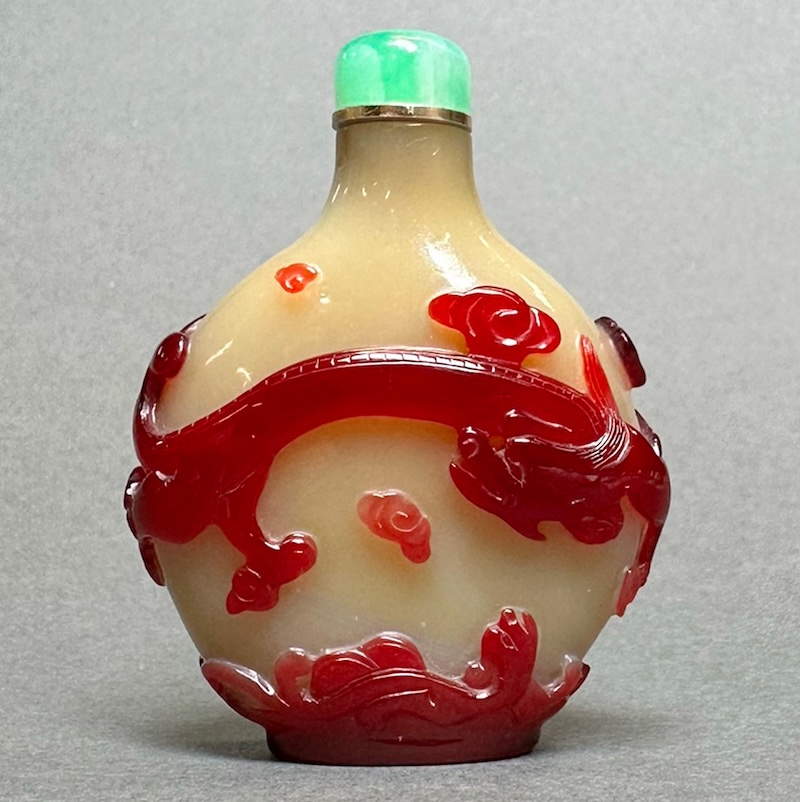
Overlay glass bottles demonstrate advanced technical skill. These are created by casing one color of glass over another and then carving away the outer layer to form raised designs, patterns, or inscriptions. The precision required and interesting combinations of colors makes overlay glass among the most admired types.

Porcelain and Stoneware
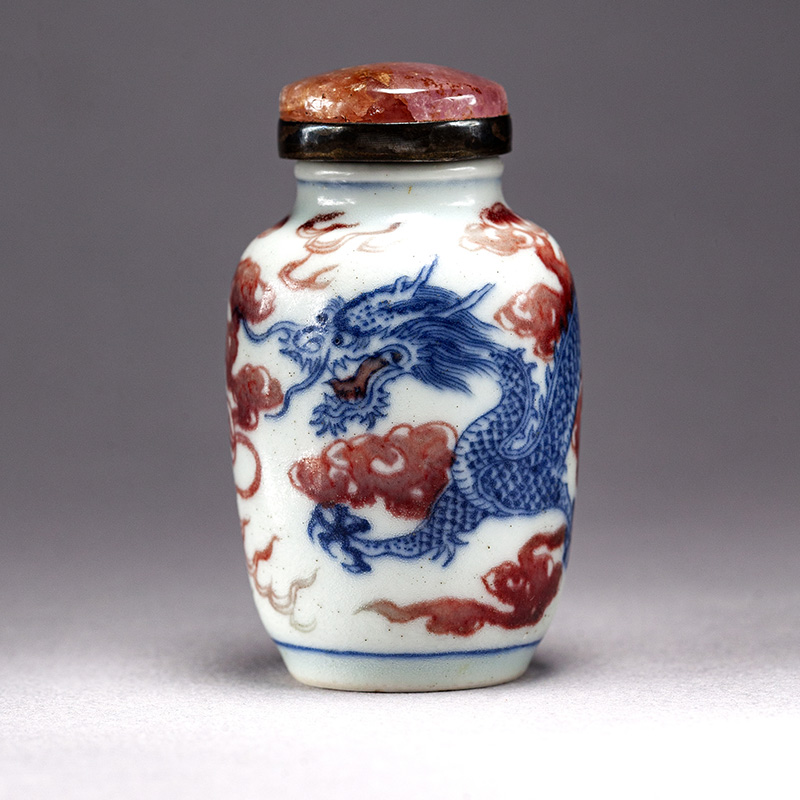
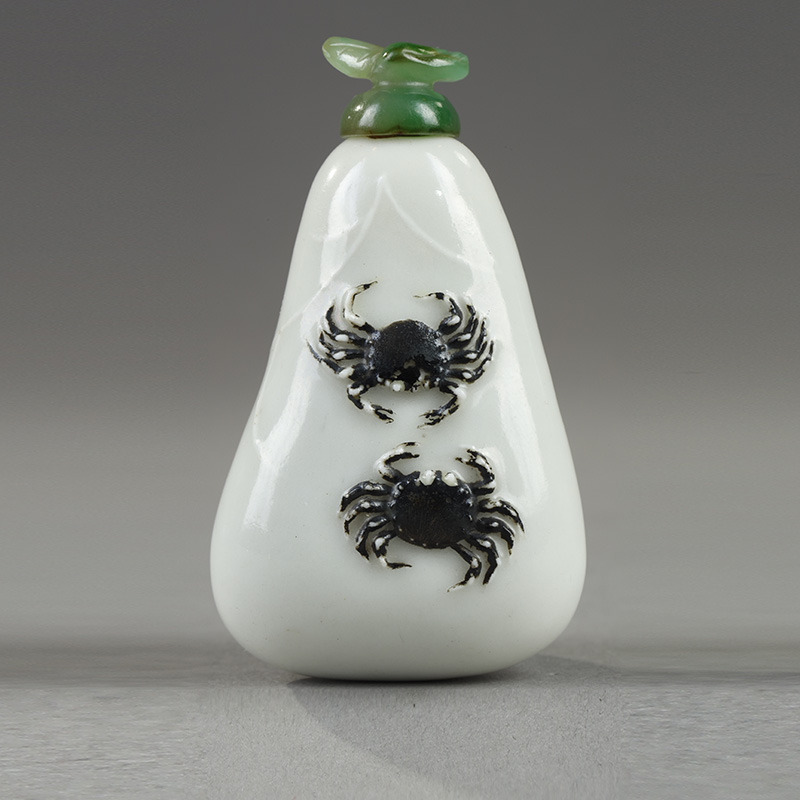
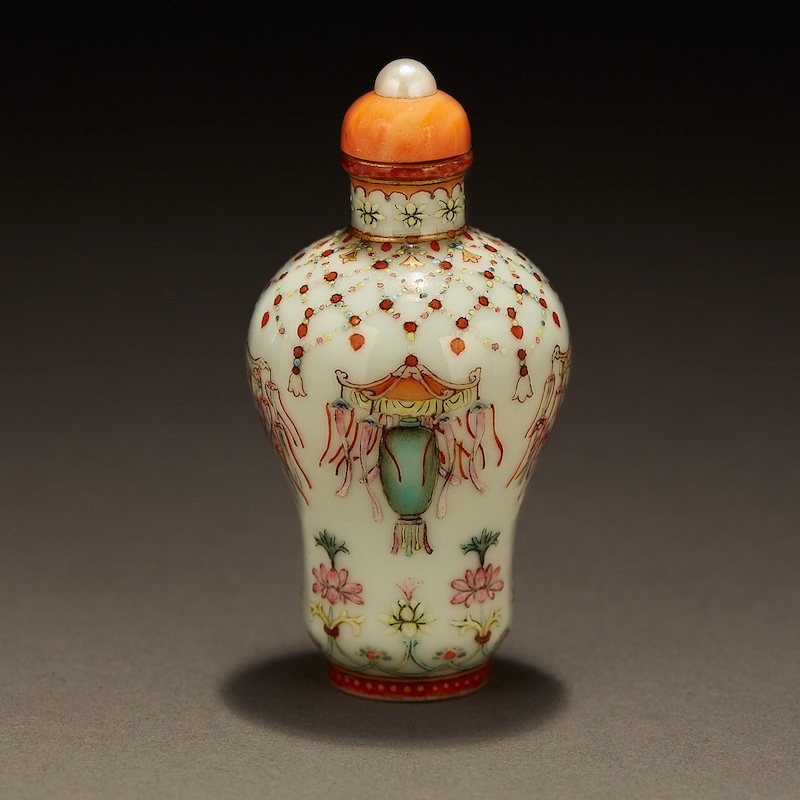
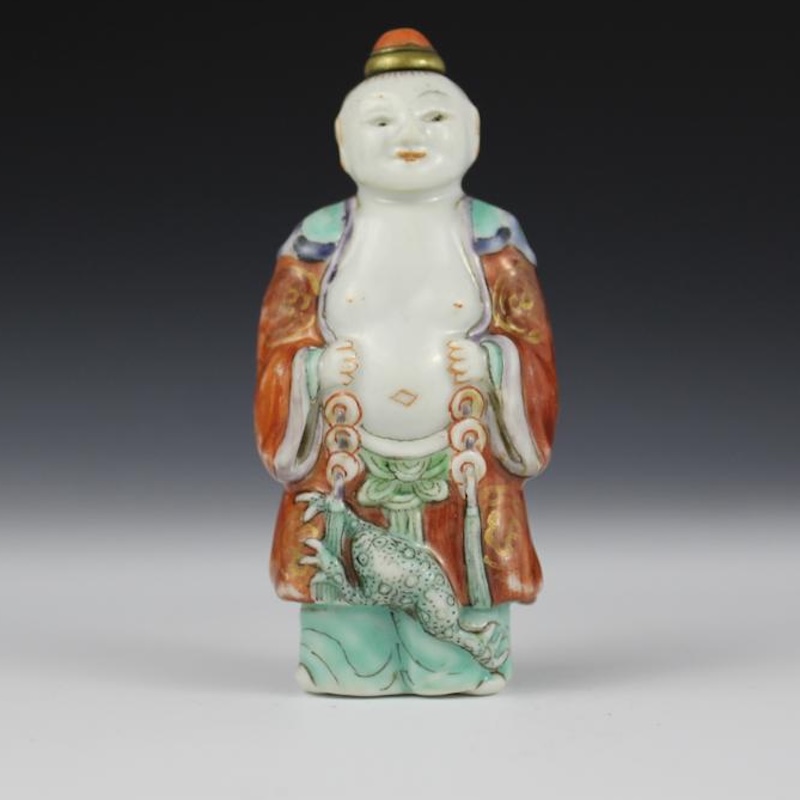
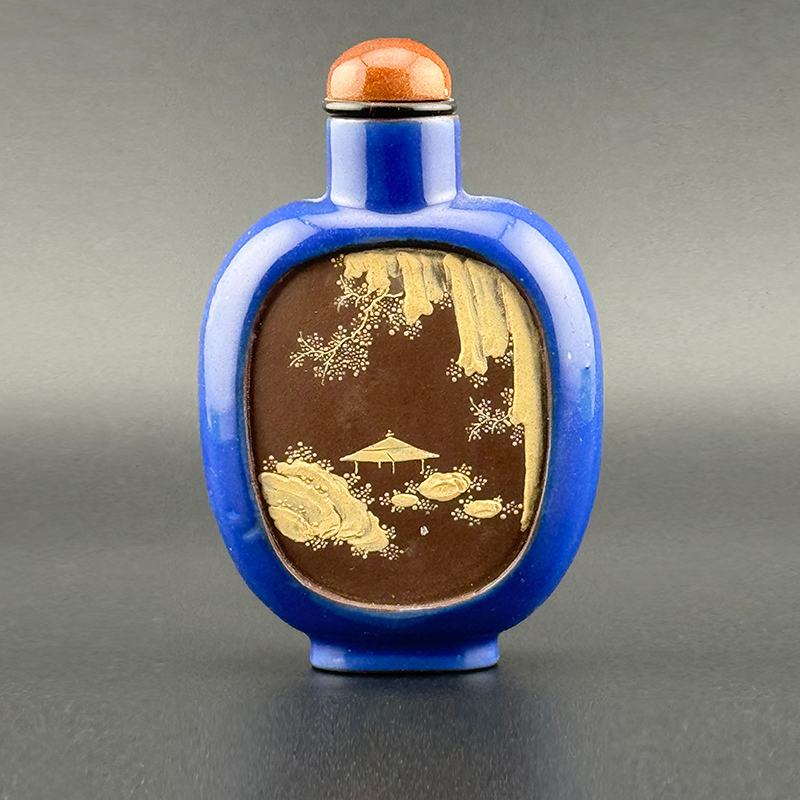
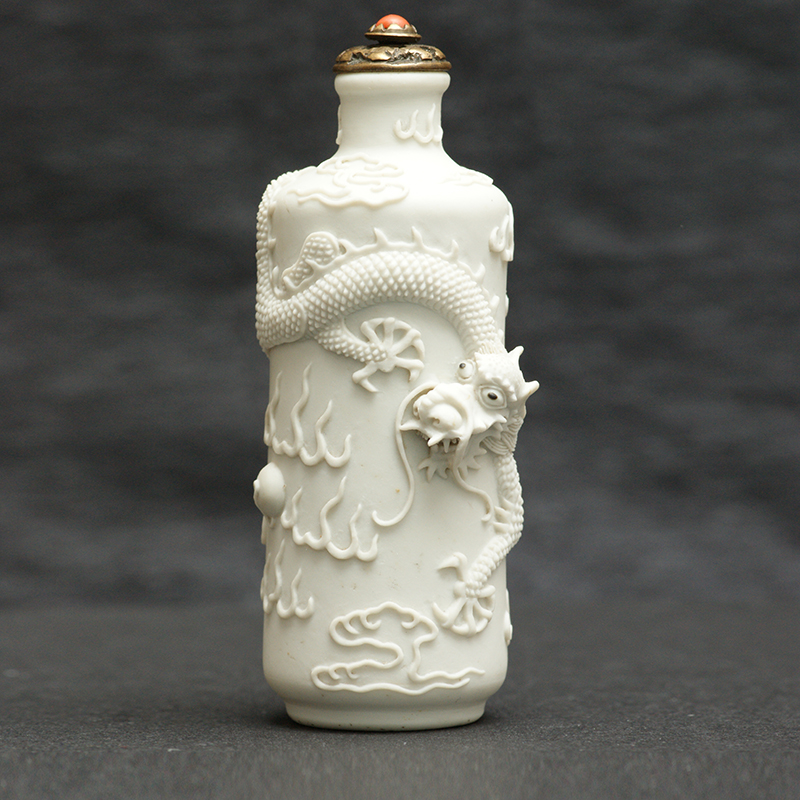
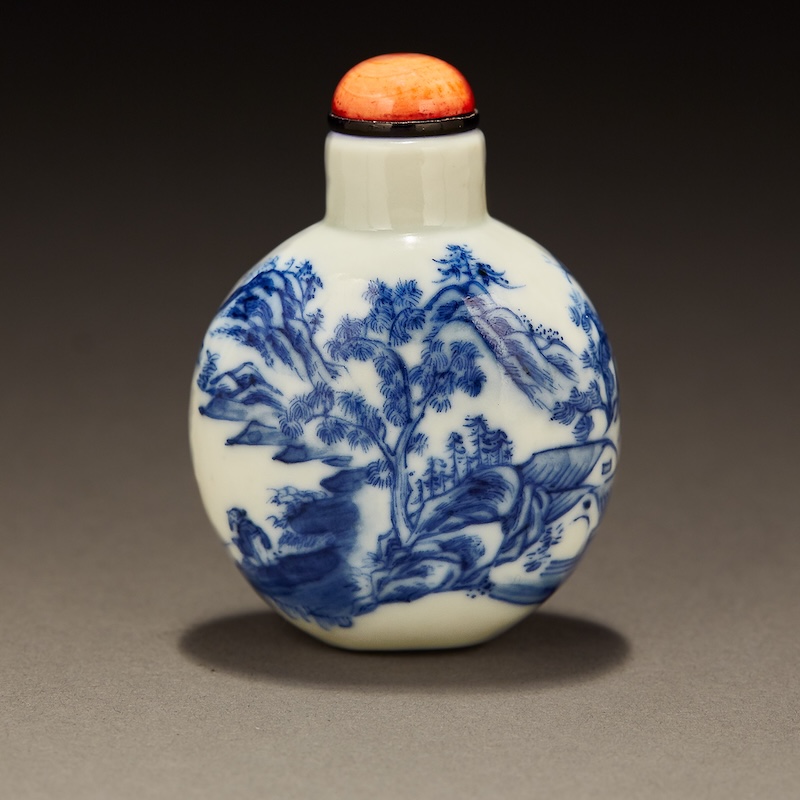
Because ceramics allow for narrative and painterly surfaces, these bottles frequently emphasize imagery over material rarity.

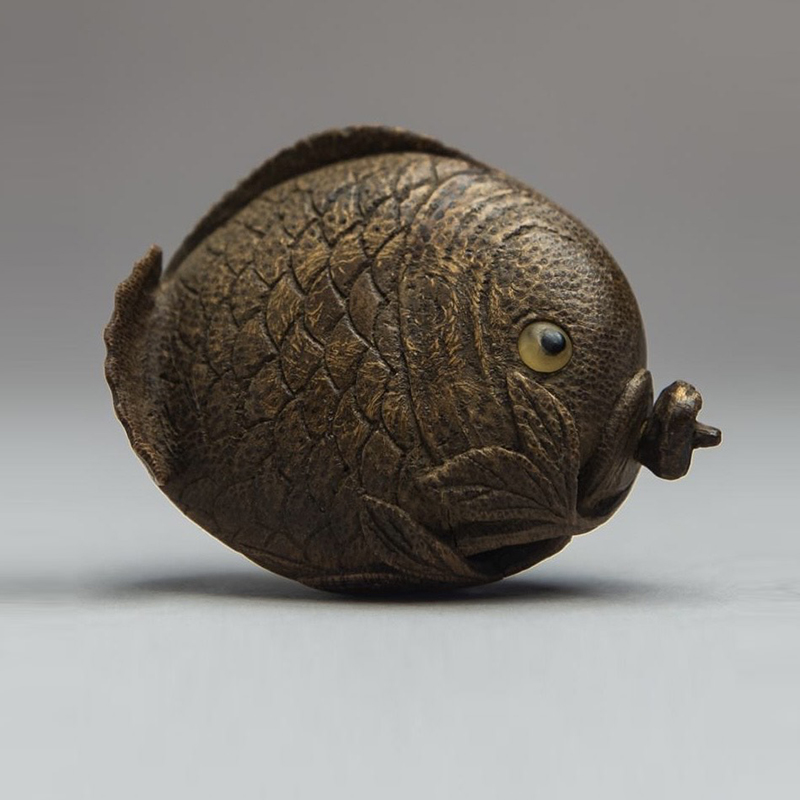
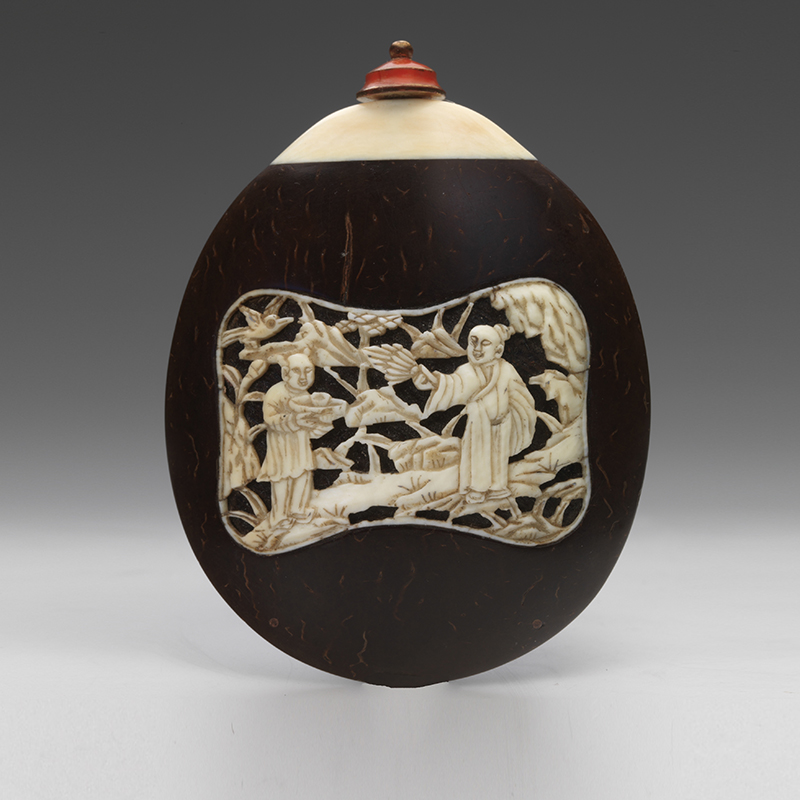
Organic
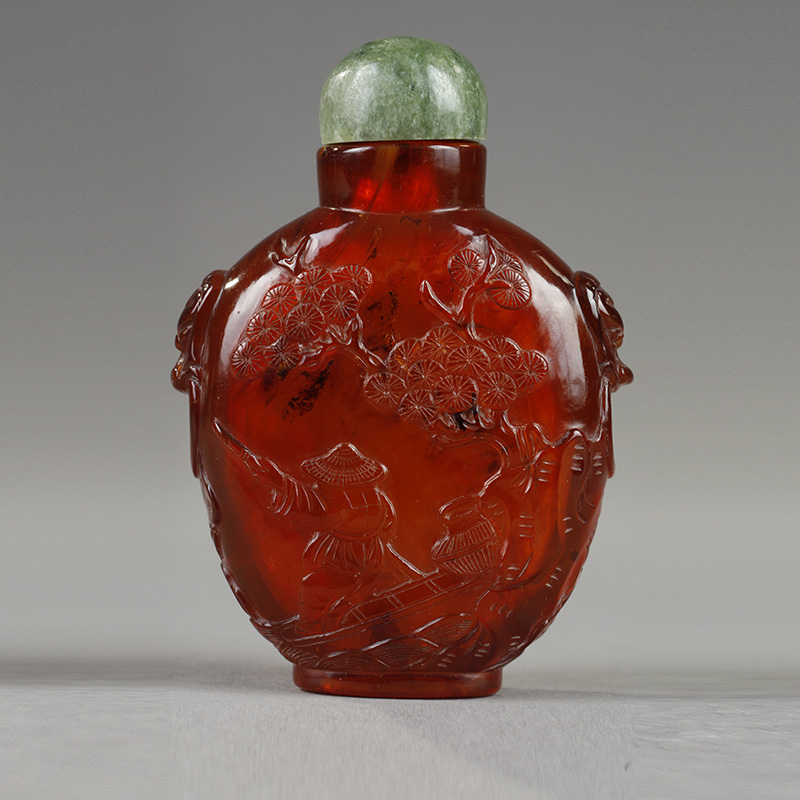
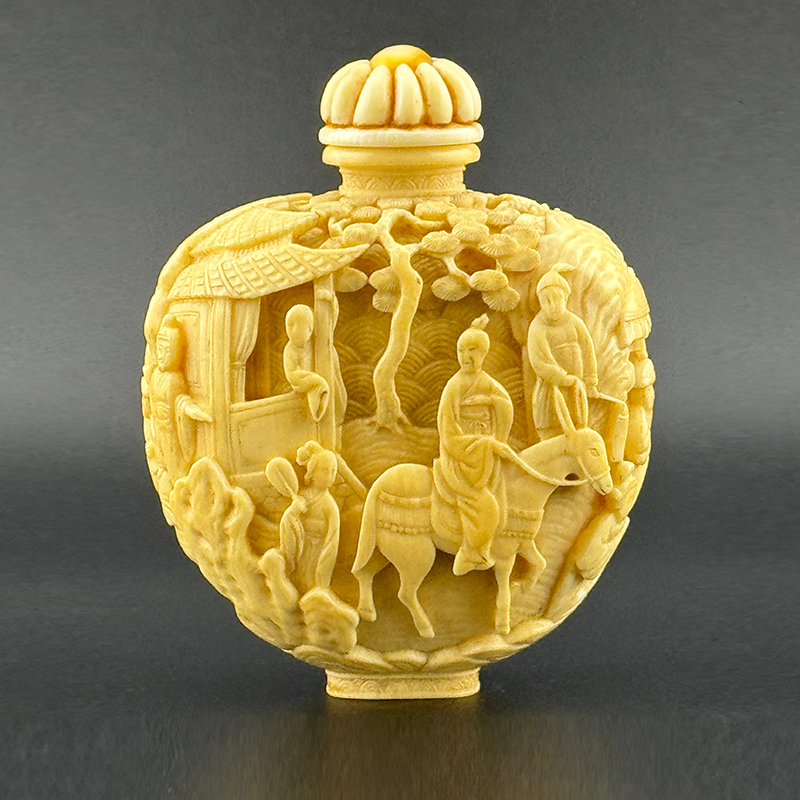
Because organic materials age differently than stone or glass, they present unique considerations for preservation and study.

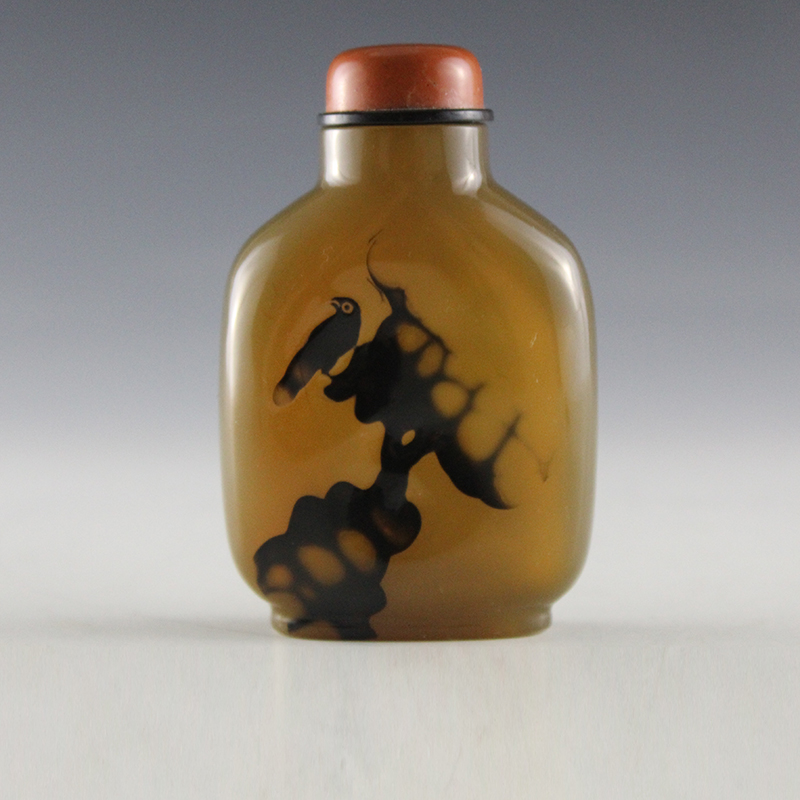
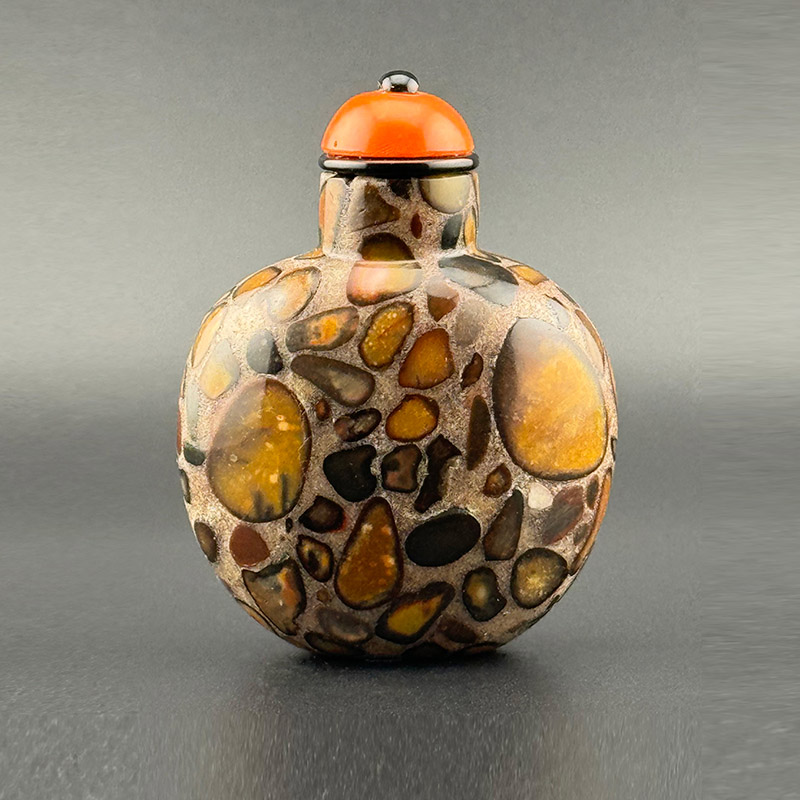
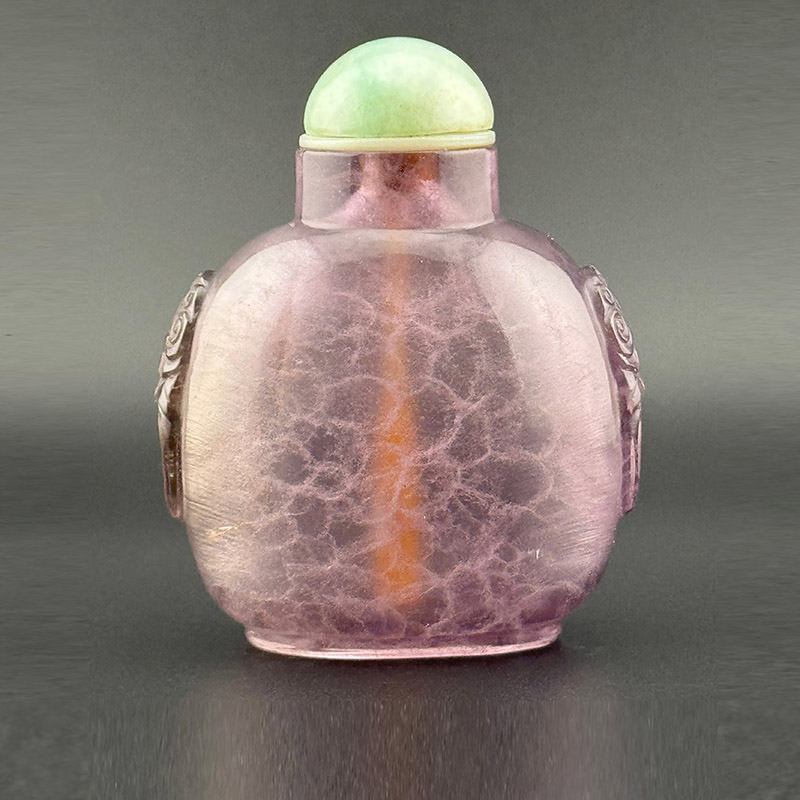
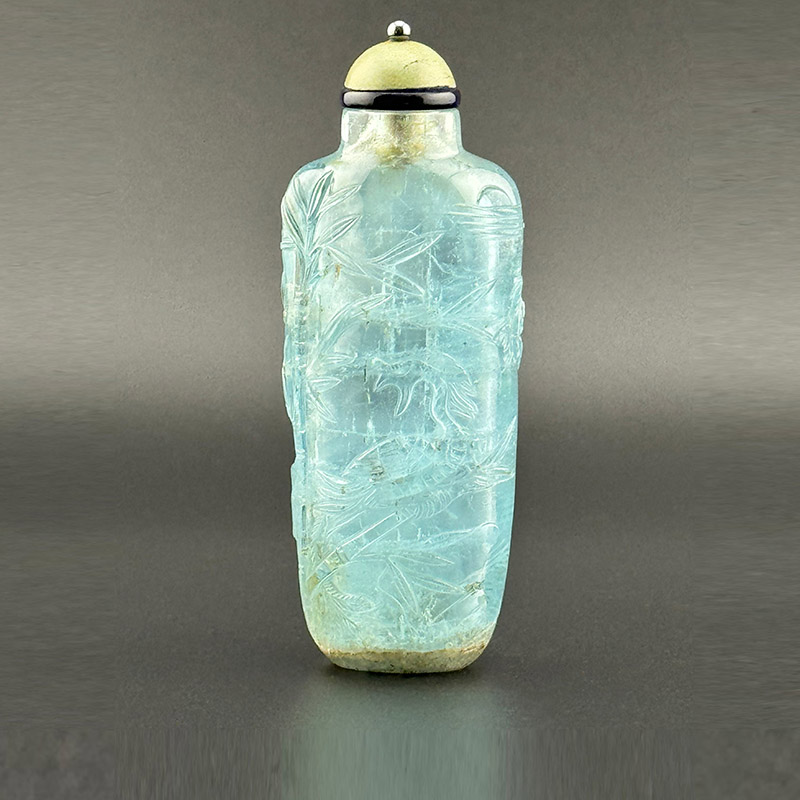
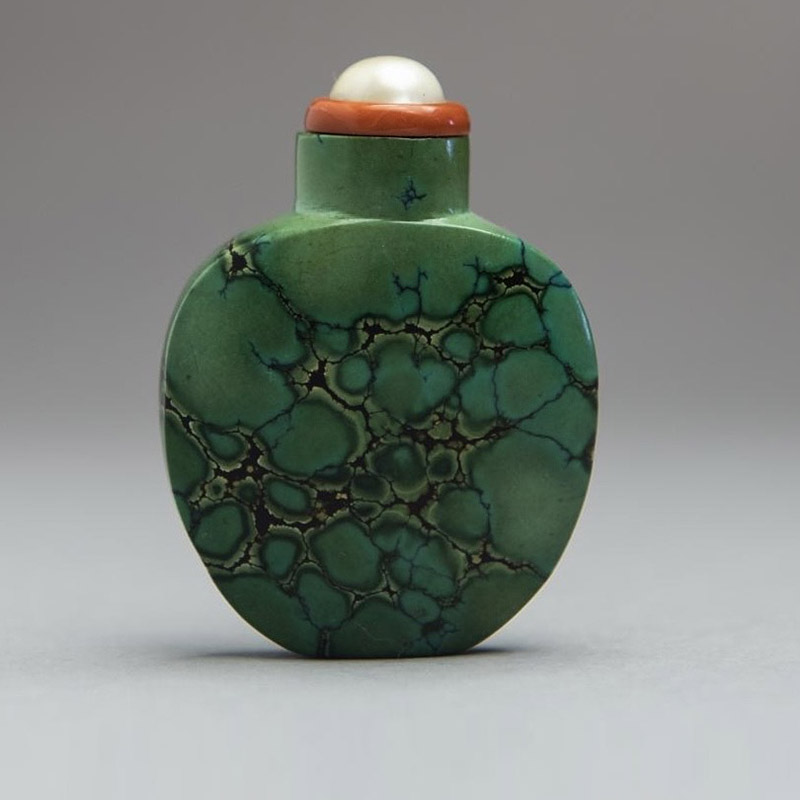
Gem, Stone, Rock and Fossil
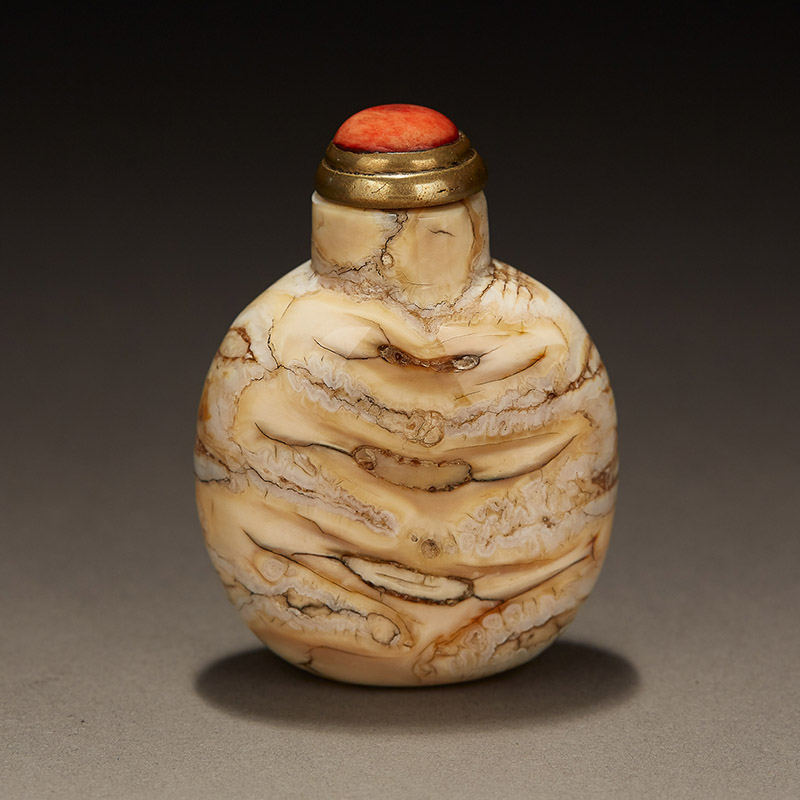
Collectors value these bottles for their individuality and the way natural features are preserved or subtly enhanced by the maker.
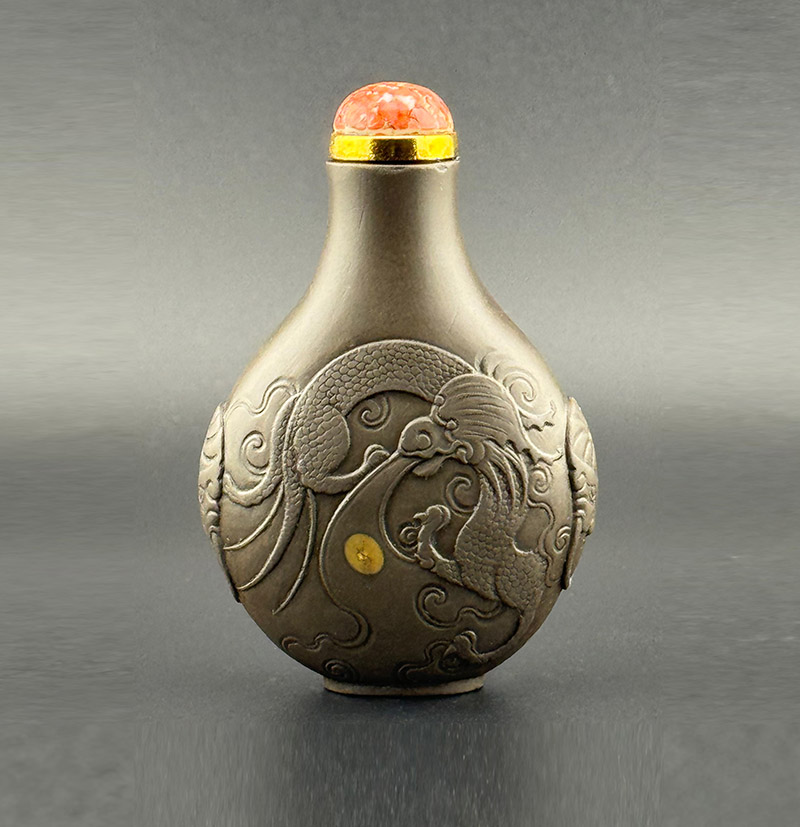

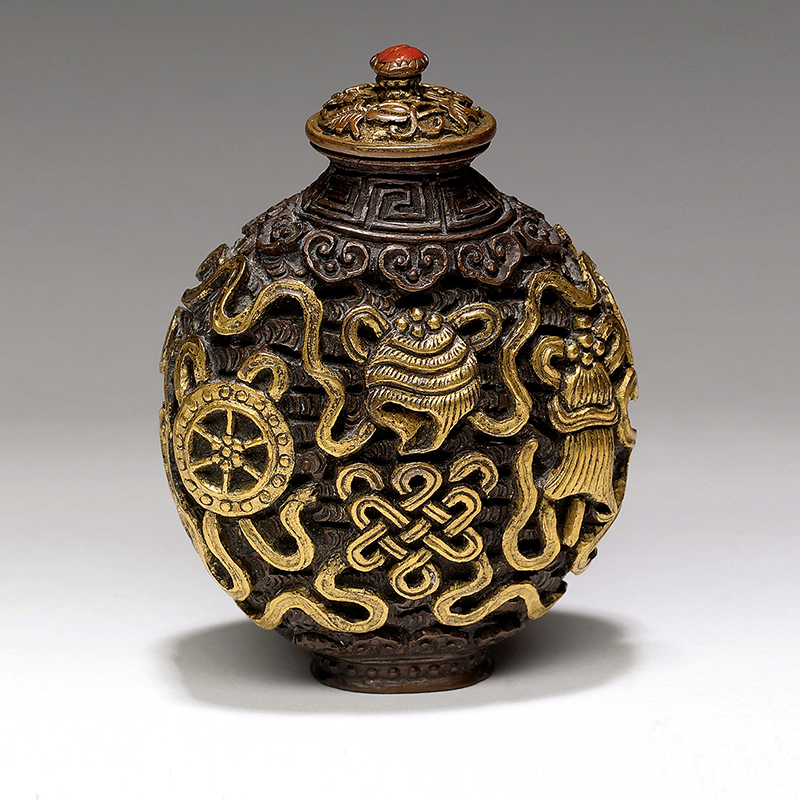
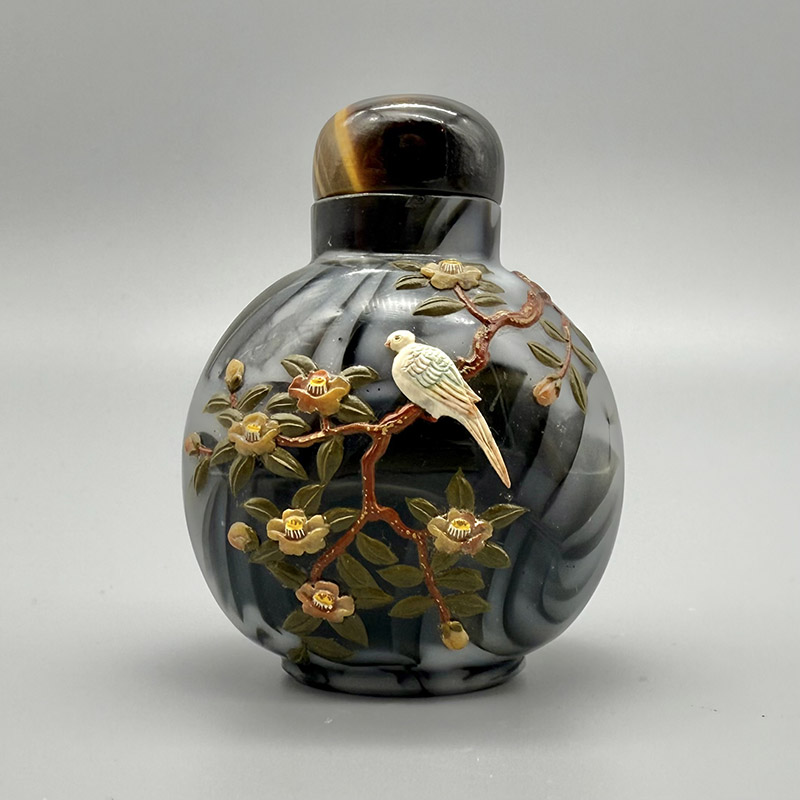
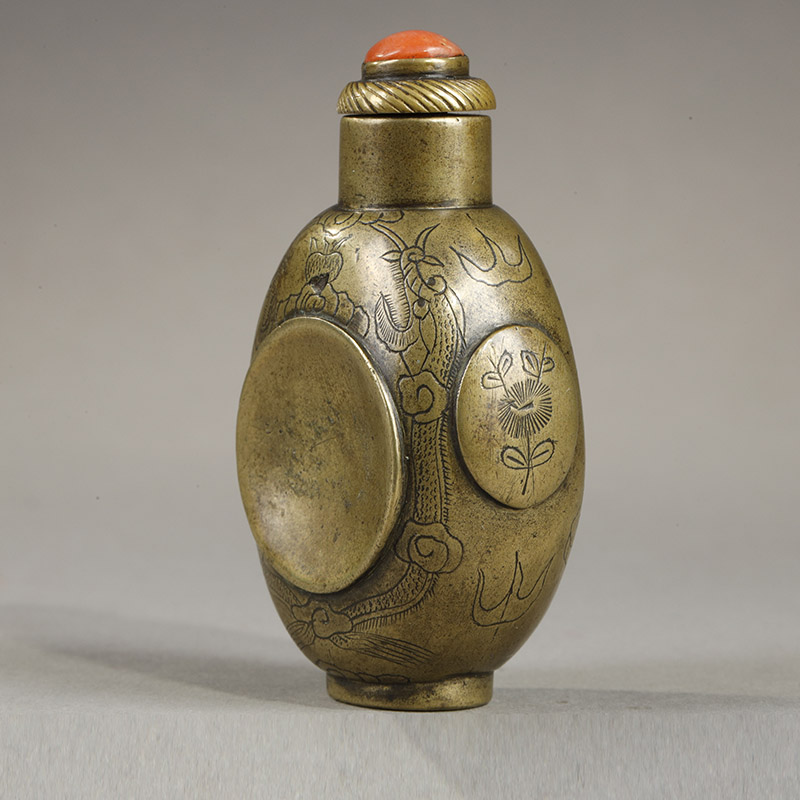
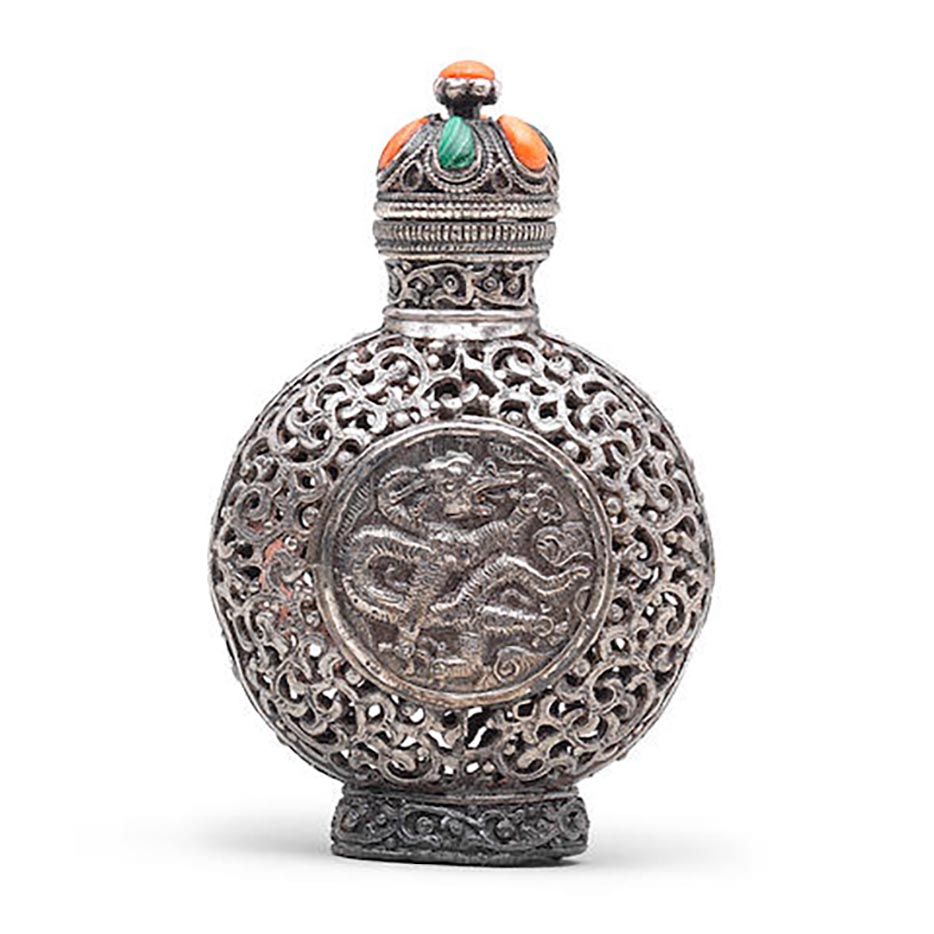
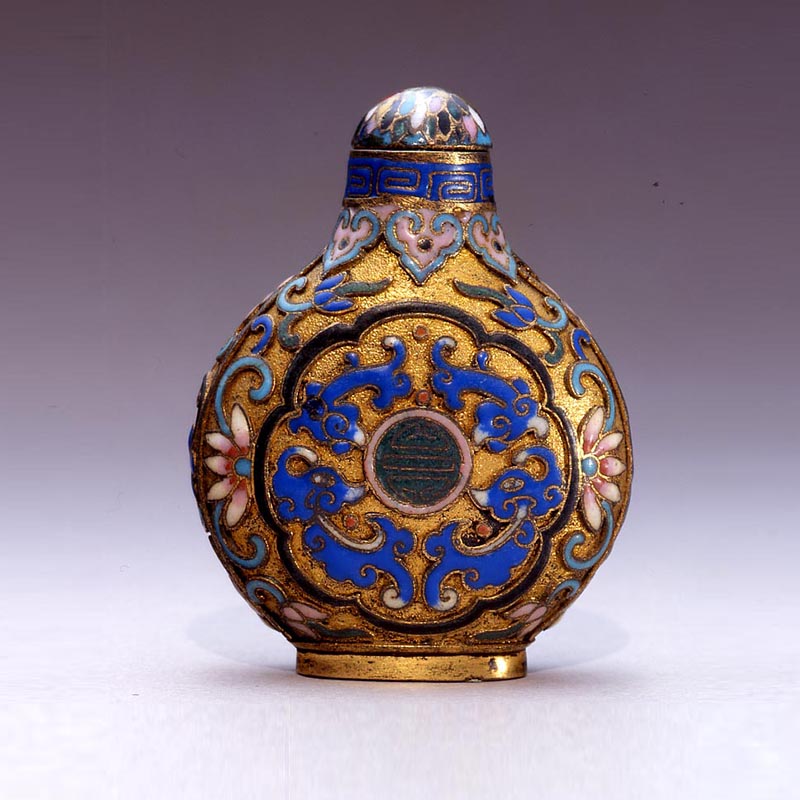
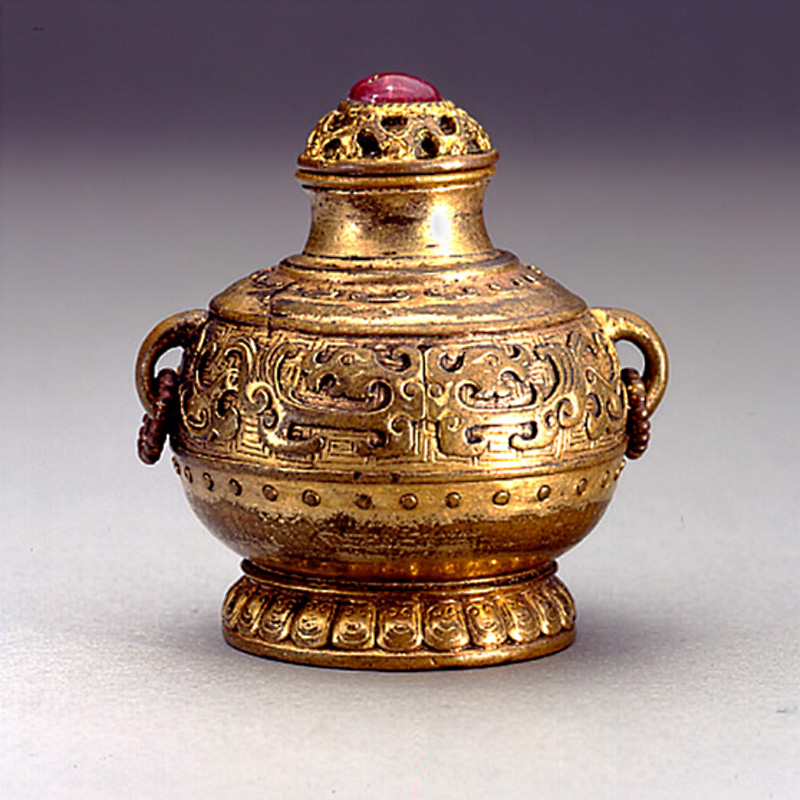
Metal and Embellished
This category often reflects cross-disciplinary craftsmanship, combining metalwork with lapidary or enamel techniques.
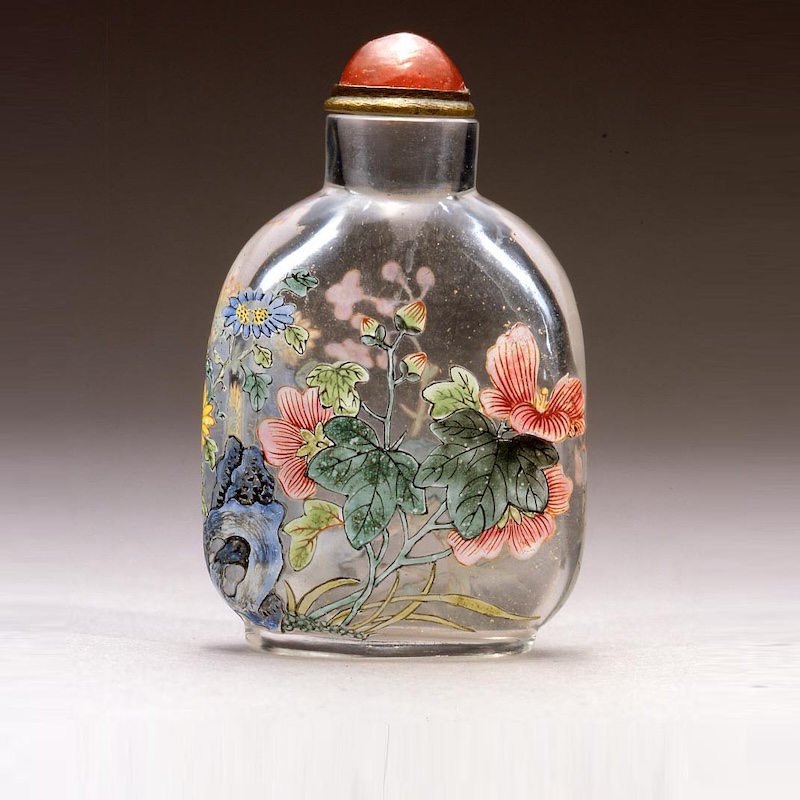
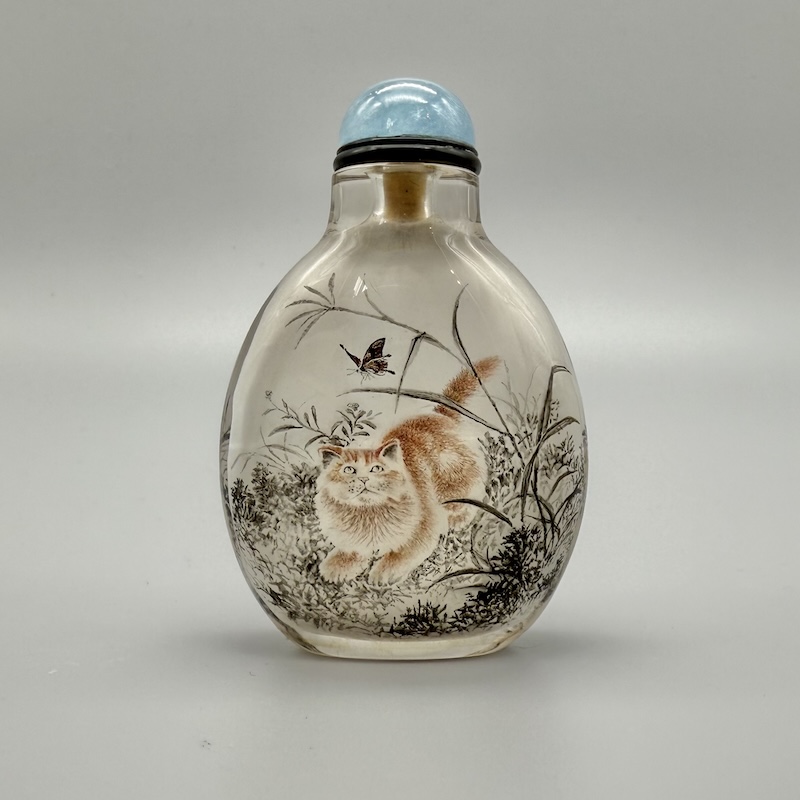
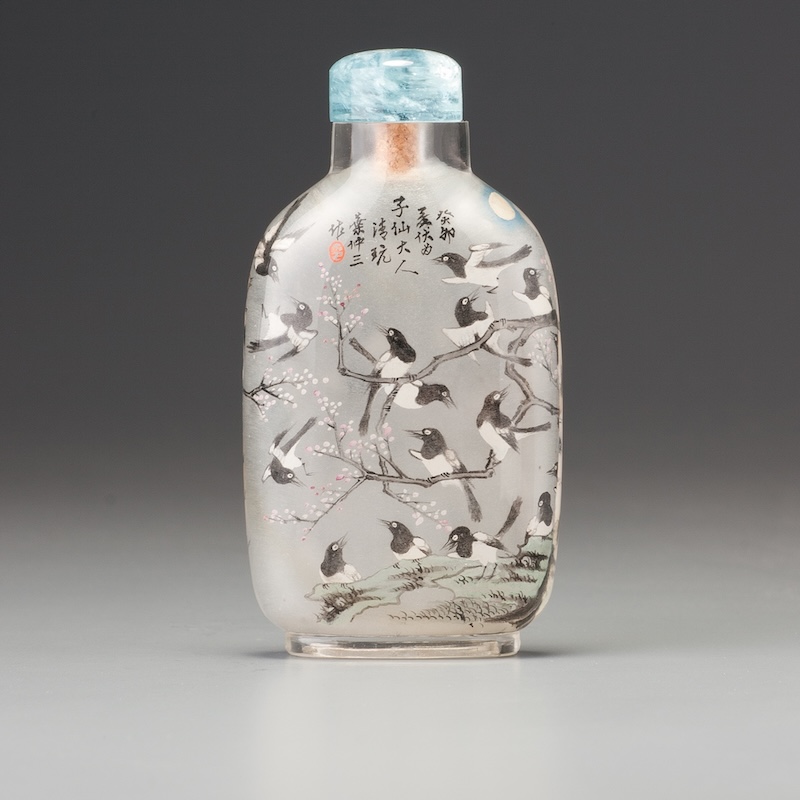
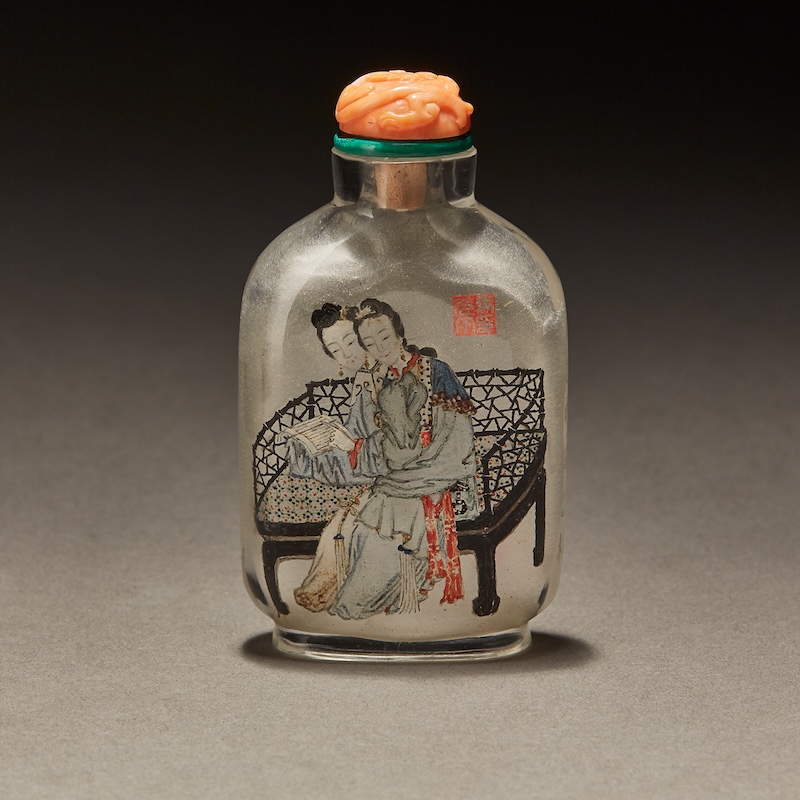
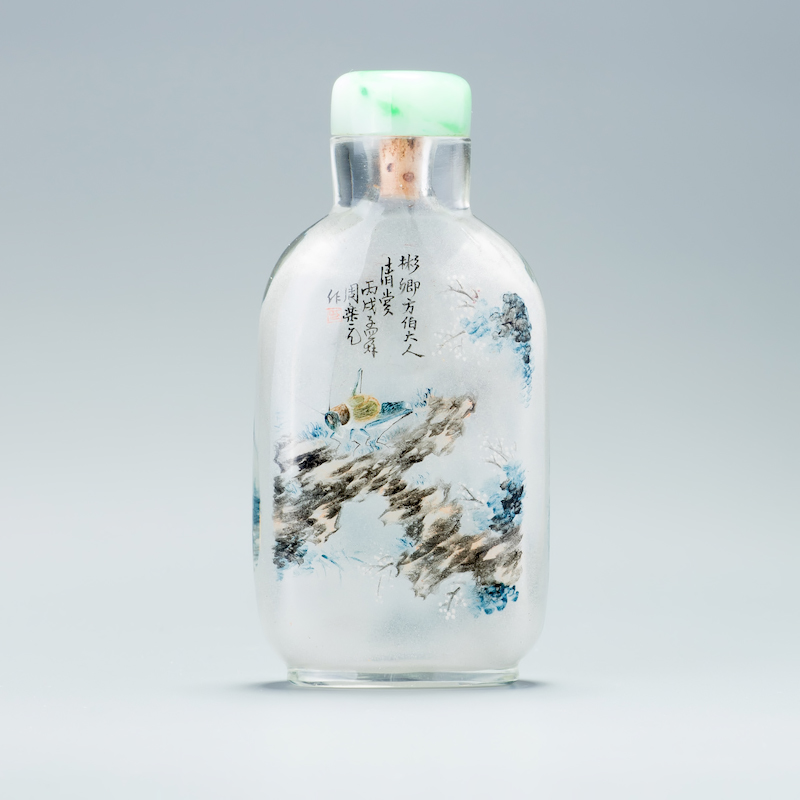
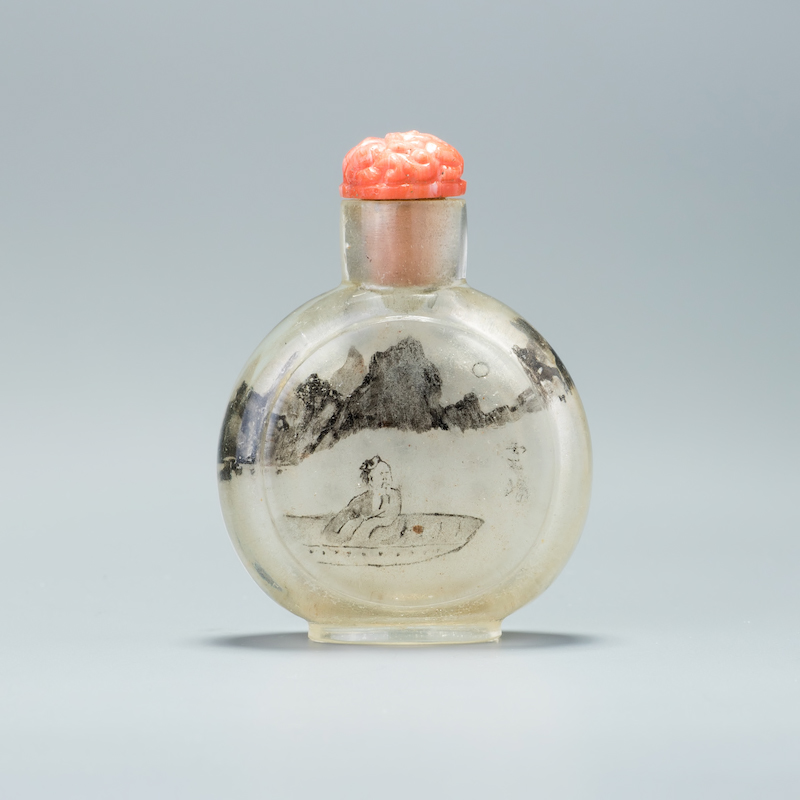
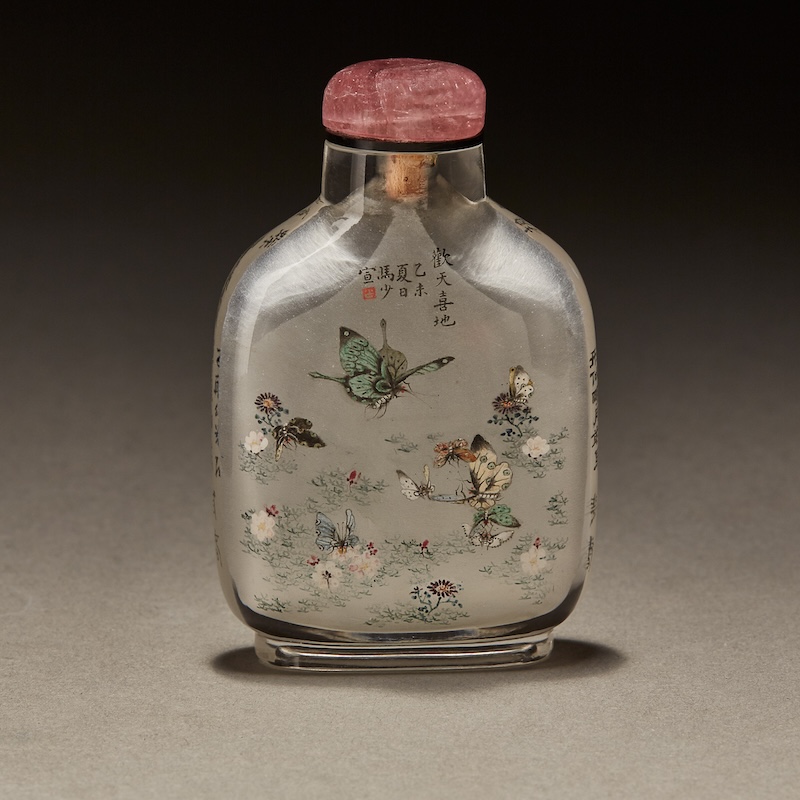
Inside-Painted
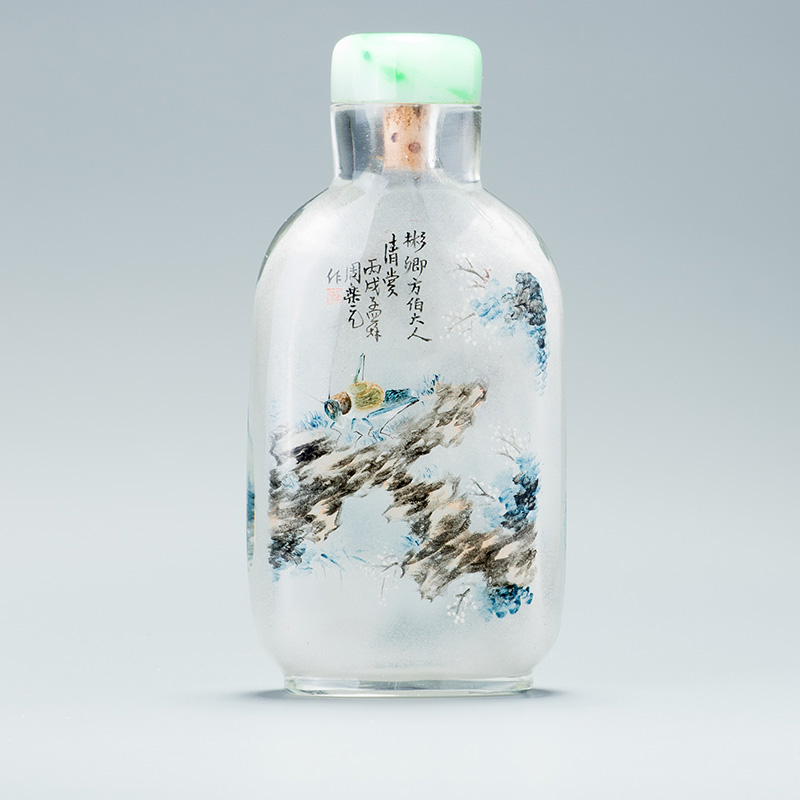
One of the most influential modern masters of inside-painted bottles is Wang Xisan, an Honorary Lifetime Member of the International Chinese Snuff Bottle Society. His work exemplifies the expressive and intellectual possibilities of the medium.
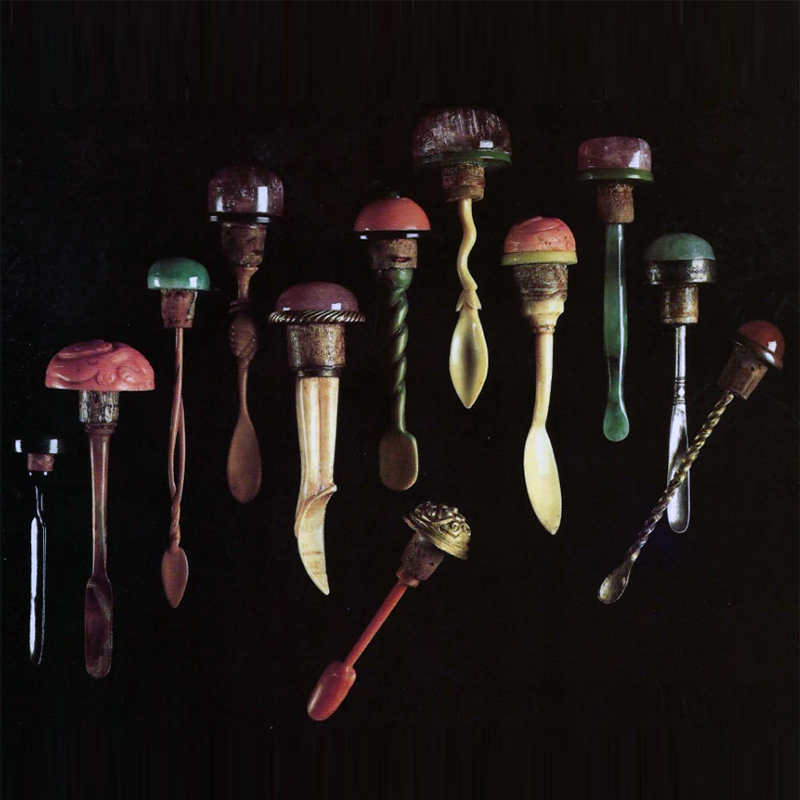
Stoppers, Spoons and Dishes
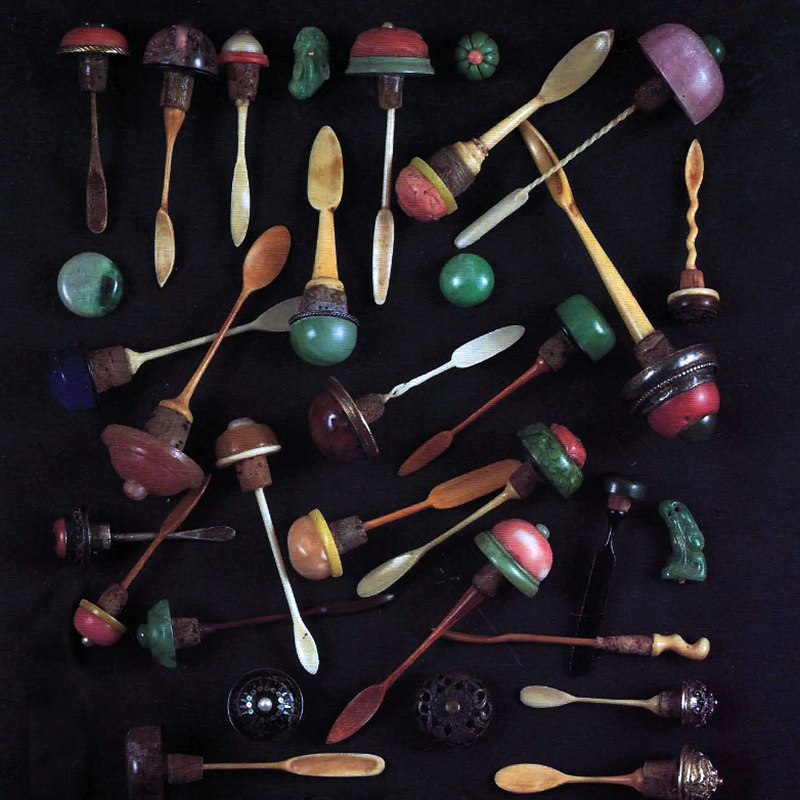
Snuff dishes, used for preparing or offering snuff, further illustrate the broader material culture surrounding use, display, and social exchange of snuff.
Symbolism and Chinese Rebuses
A rebus functions by using images whose spoken names sound like other meaningful words or phrases. For example, a bat frequently appears on snuff bottles not for its literal form, but because the word for bat (fu) is a homophone for “good fortune.” When combined with other motifs—such as peaches, coins, or clouds—the imagery forms compound messages wishing prosperity, longevity, or success. These meanings were immediately legible to contemporary viewers familiar with the language and conventions.
Symbolic motifs also draw on long-standing associations in Chinese culture. Animals, plants, objects, and natural phenomena often carry specific connotations. Deer may suggest emolument or official success; cranes can imply longevity; fish often symbolize abundance; and lotus flowers may reference purity or harmony. Numbers, colors, and directional elements may further reinforce intended meanings.
On many bottles, symbolism is cumulative rather than singular. Multiple motifs may be combined to form auspicious phrases or layered blessings, allowing a small object to convey a complex message. In some cases, the symbolism relates directly to the owner’s personal circumstances—such as scholarly ambition, career advancement, or family well-being—while in others it reflects more universal hopes for health, happiness, and longevity.
Importantly, symbolism is not limited to surface decoration. Material choice, color, and even natural inclusions within stone bottles can carry meaning or be interpreted symbolically. Collectors and scholars often study these elements together, considering how imagery, material, and craftsmanship interact to create a coherent visual statement. Understanding symbolism and rebuses enriches appreciation of snuff bottles beyond their craftsmanship alone. It reveals how these small objects functioned as intimate carriers of meaning, capable of expressing identity, intention, and cultural values in a highly condensed form.
An excellent resource for Chinese symbolism is Terese Tse Bartholomew's thoroughly researched Hidden Meanings in Chinese Art.