Burghley House Collection
Burghley House
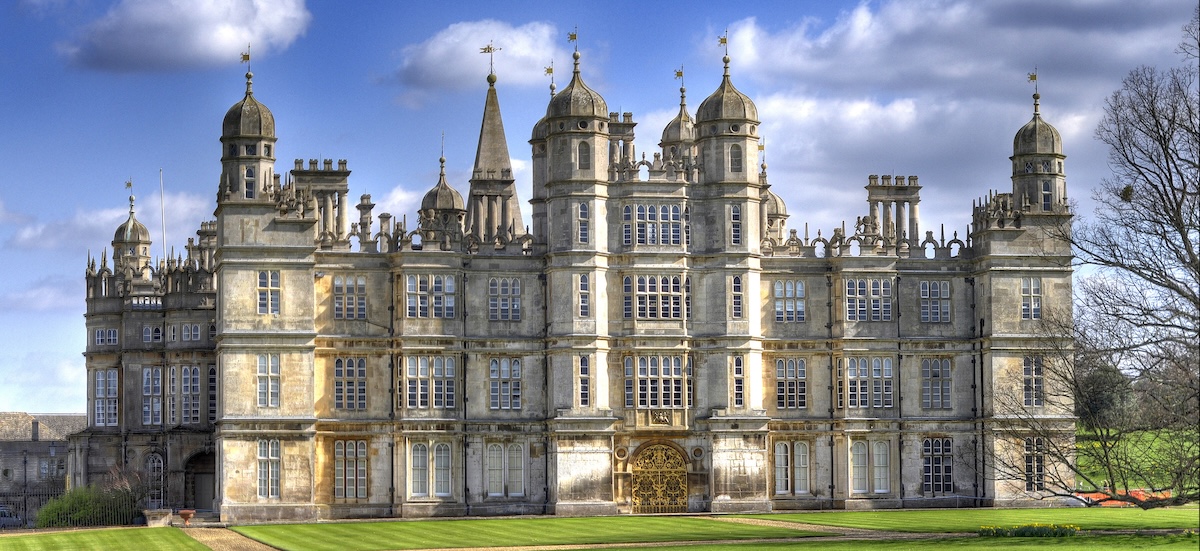
Photo: Anthony Masi; Cover photo: Burghley House
Burghley House's collection of Chinese snuff bottles is considered one of the finest in the Western world, and its origins are as distinctive as the bottles themselves. The collection was originally assembled between 1900 and 1939 by a Welsh missionary doctor working in China, with many pieces originating from the Imperial workshops in Beijing, and was purchased in its entirety by David, 6th Marquess of Exeter in the 1950s. That an intact collection of this caliber passed whole into a great English country house, rather than being dispersed at auction, makes Burghley an unusually coherent resource for students and collectors of the form.
Home to a group of ten exceptionally rare famille-rose enamel on carved glass bottles, Burghley's snuff bottle holdings represent one of the most intact and distinguished private collections in the Western world.
Additional resources
From the collection

Rare enamel on carved glass with birds and flowers
China (Beijing), circa 1770–1850, Qing dynasty. Snuff bottle. Opaque white glass, carved in relief and painted in famille-rose enamels with a pheasant and peonies on one side, quail and chrysanthemums on the other. Burghley House Collection. © Burghley House. Reference: CSBE.1.

Rare enamel on carved glass with lotus leaves and flowers
China (Beijing), circa 1770–1850, Qing dynasty. Snuff bottle. Opaque white glass, carved in relief and painted in famille-rose enamels with a continuous design of lotus leaves, flowers, and buds; base inscribed in red with the three-character guyuexuan mark. Burghley House Collection. © Burghley House. Reference: CSBE.2.
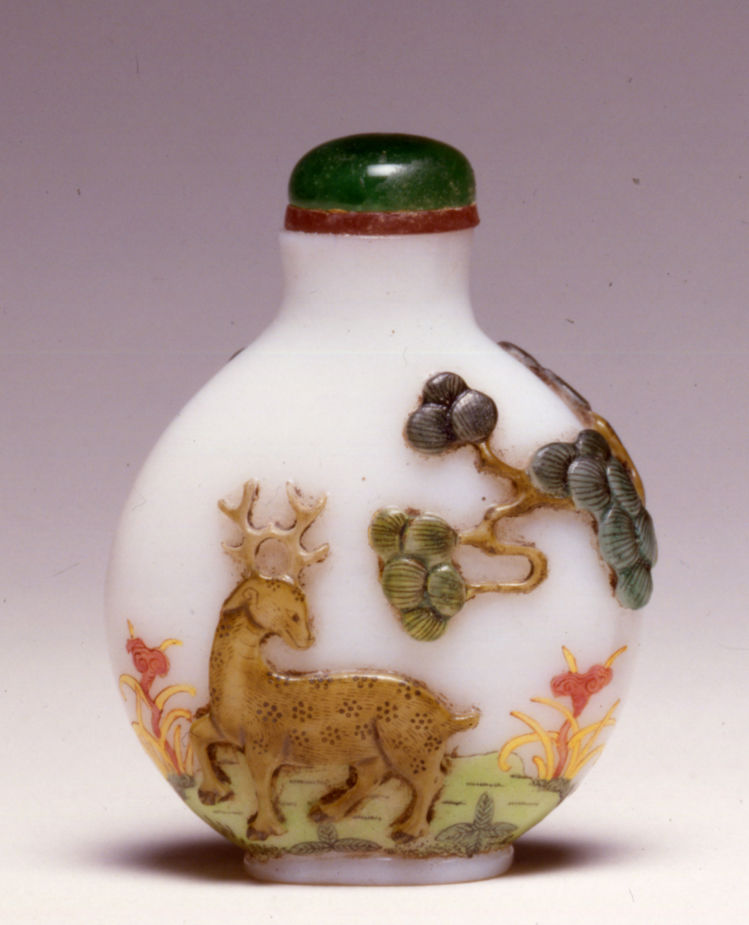
Rare enamel on carved glass with deer and fungus
China (Beijing), circa 1770–1850, Qing dynasty. Snuff bottle. Opaque white glass, carved in relief and painted in famille-rose enamels with a prancing deer and sprays of lingzhi on one side, a stork in a rocky landscape on the other. Burghley House Collection. © Burghley House. Reference: CSBE.8.
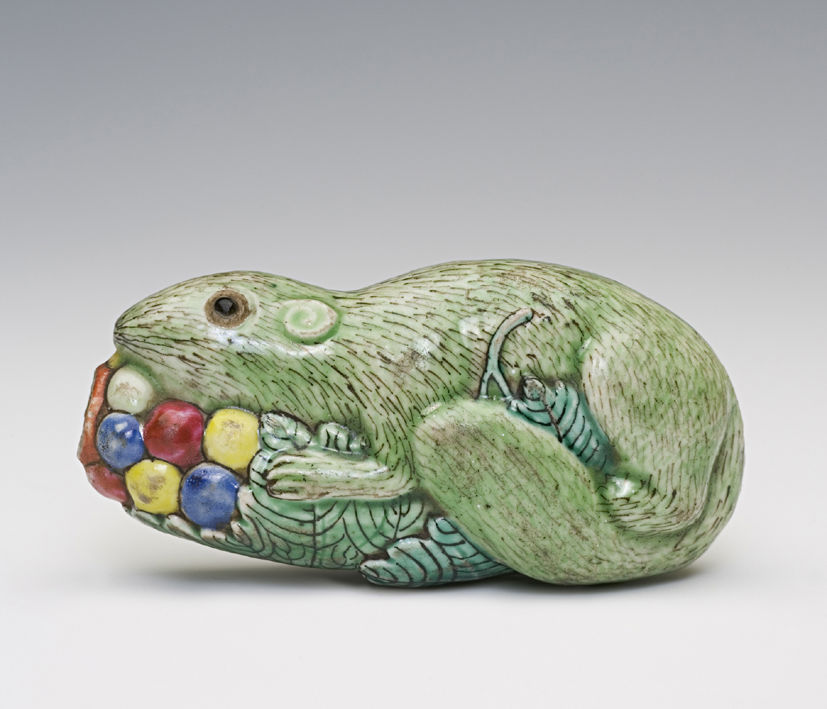
Porcelain molded in the form of a squirrel on a grapevine
China, 1795–1840, Qing dynasty. Snuff bottle. Porcelain moulded in the form of a squirrel on a grapevine, decorated in green and famille-rose enamels. Burghley House Collection. © Burghley House. Reference: CSBC.36.

Unusual multi-color glass overlay
China (Beijing), 1820–1920, Qing dynasty. Snuff bottle. Ochre glass with multicolored overlay carved to simulate pomegranate skin, with green leaves and red seeds. Burghley House Collection. © Burghley House. Reference: CSBG.117.
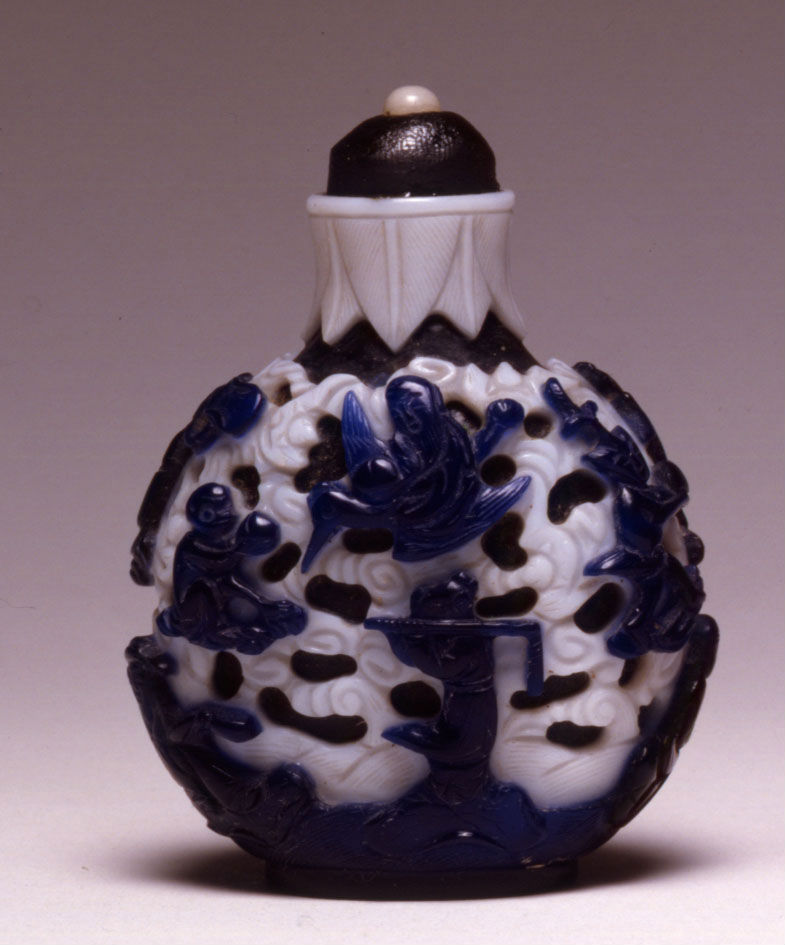
Double-overlay glass with blue on white on black ground
China, 1780–1880, Qing dynasty. Snuff bottle. Black glass with double overlay of deep blue and white, depicting a monkey offering a peach to Shou Lao surrounded by the Eight Immortals on a cloud ground; acanthus leaf collar at neck. Burghley House Collection. © Burghley House. Reference: CSBG.115.
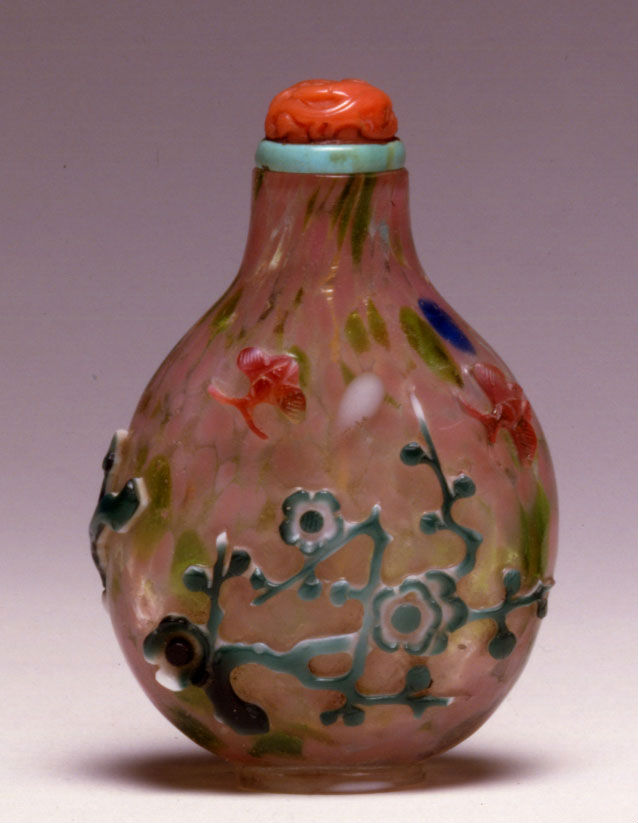
Unusual multi-color glass overlay with flowering prunus and butterflies on mottled ground
China (Beijing), 1800–1880, Qing dynasty. Snuff bottle. Mottled pink and blue glass with double overlay of green and white, depicting butterflies hovering above flowering prunus. Burghley House Collection. © Burghley House. Reference: CSBG.116.

Famille rose enamel on white glass
China (Beijing), circa 1770–1850, Qing dynasty. Snuff bottle. Opaque white glass, carved in relief and painted in famille-rose enamels with flowering prunus and peony on one side, narcissus and chrysanthemum on the other. Burghley House Collection. © Burghley House. Reference: CSBE.4.

Molded porcelain with Buddhist lions playing
3:25 PMClaude responded: China (Jingdezhen), 1796–1820, Qing dynasty, Jiaqing reign.China (Jingdezhen), 1796–1820, Qing dynasty, Jiaqing reign. Snuff bottle. Porcelain moulded with nine Buddhist lions playing with brocade balls, decorated in famille-rose enamels on a white cloud ground; base inscribed in red with Jiaqing nianzhi seal mark. Burghley House Collection. © Burghley House. Reference: CSBC.58.
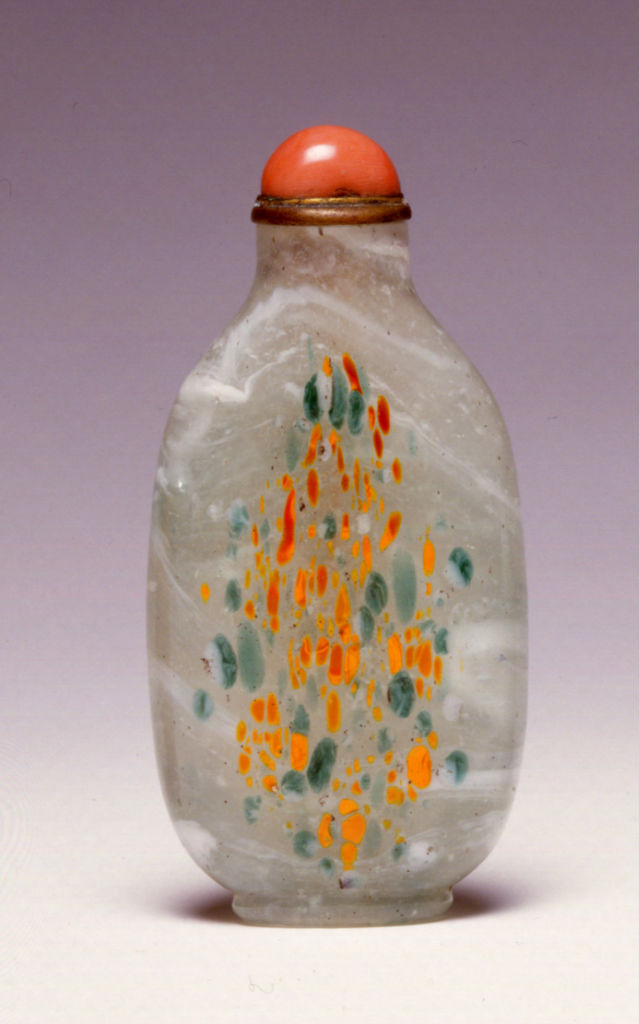
Mottled glass with orange and green splashes
China (Beijing), 1750–1850, Qing dynasty. Snuff bottle. Mottled pale green glass of flattened rectangular form, suffused with white swirls and splashed with orange and green droplets. Burghley House Collection. © Burghley House. Reference: CSBG.21.
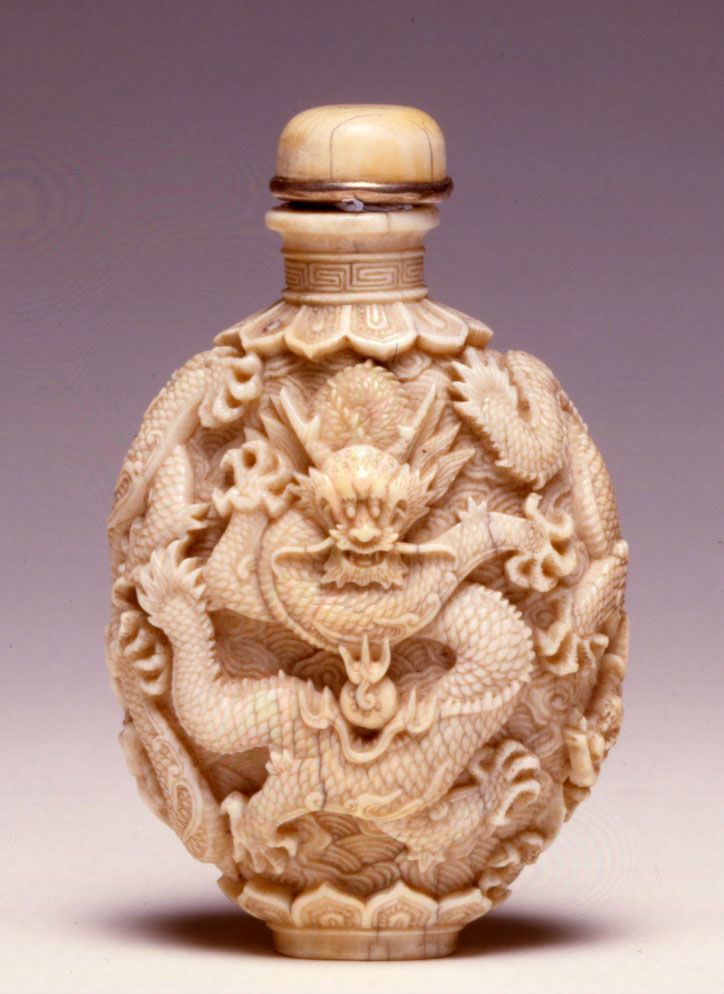
Imperial ivory carved with dragons
China (Beijing, Palace Workshops), 1796–1820, Qing dynasty, Jiaqing reign. Snuff bottle. Ivory carved on each side with an imperial dragon coiled around a flaming pearl, flanked by descending dragons on a wave ground; base incised with Jiaqing nianzhi seal mark within a double square. Burghley House Collection. © Burghley House. Reference: CSBO.5.
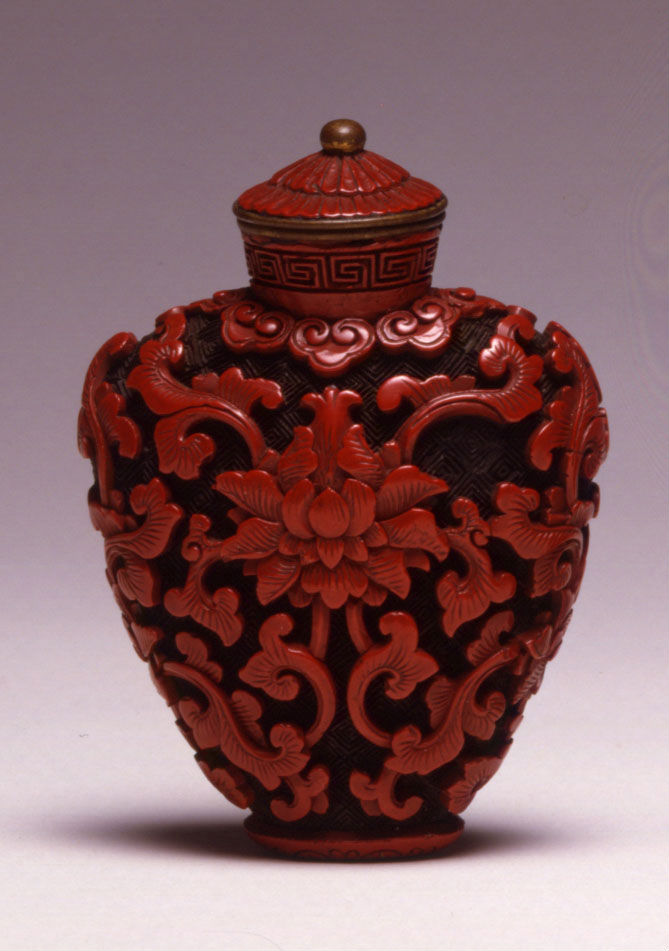
Cinnabar lacquer with lotus scroll
China, 1736–1795, Qing dynasty, Qianlong reign. Snuff bottle. Cinnabar lacquer of spade form, carved with stylised lotus scroll on a green diaper ground; matching stopper. Burghley House Collection. © Burghley House. Reference: CSBO.33.
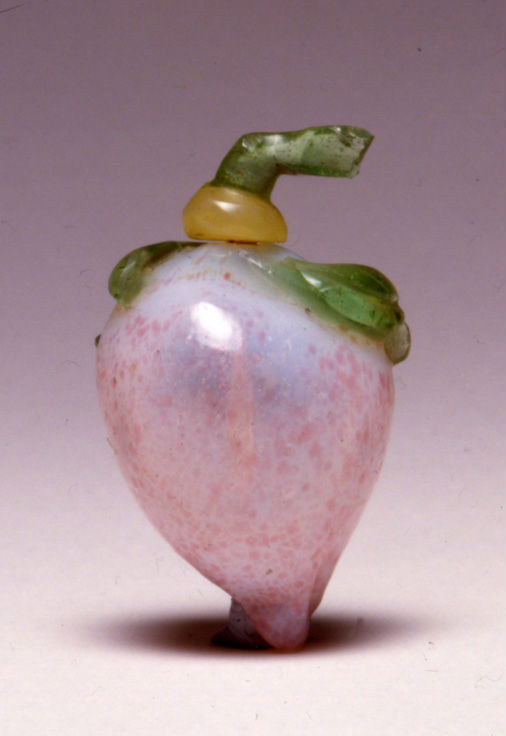
Glass moulded in the form of a peach
China (Beijing), 1800–1920, Qing dynasty. Snuff bottle. Mottled pink and white glass moulded in the form of a peach, with green glass overlay of leaves and matching twig stopper. Burghley House Collection. © Burghley House. Reference: CSBG.93.

Red overlay glass with phoenix
China, 1720–1830, Qing dynasty. Snuff bottle. Cloudy bubble glass with single red overlay carved on each side with a phoenix. Burghley House Collection. © Burghley House. Reference: CSBG.61.
The International Chinese Snuff Bottle Society
2 Hamill Road, Suite 353
Baltimore, MD 21210 USA
410-467-9400