Reading Reign Marks on Chinese Snuff Bottles
A reign mark is the group of characters—typically on the base of a bottle—that names an imperial reign. Though it may record a specific reign, that is not evidence of when the bottle was made, since these marks were copied and reused for well over a century. This page explains how a mark is laid out, the three scripts it would typically be written in, and details of each reign of the Qing period. It ends with why the mark alone cannot date a bottle, and what evidence can.
Special thanks to Richard Baey for reign mark images and S. L. Tan for his review and editing of the content on this page.
Anatomy of a Mark
Most reign marks are the same handful of characters in a fixed order, set in vertical columns and read top to bottom, right to left. Once you know the parts, the layout is what varies. The examples below show the arrangements you will most likely encounter.
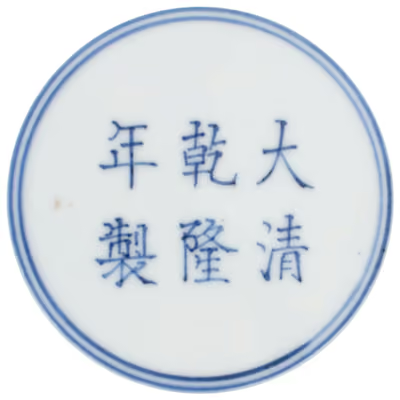
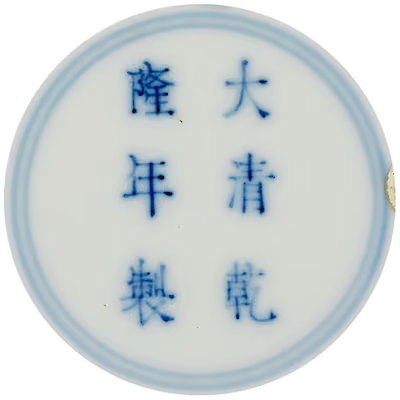
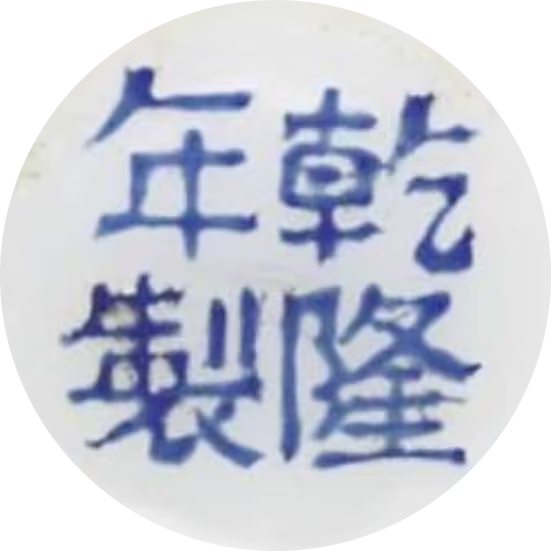
Da Qing, "the Great Qing." Names the ruling house.
Here Qianlong. The pair that changes, and the one you identify.
Nian zhi. The same on every mark, imperial or apocryphal.
Mark Scripts
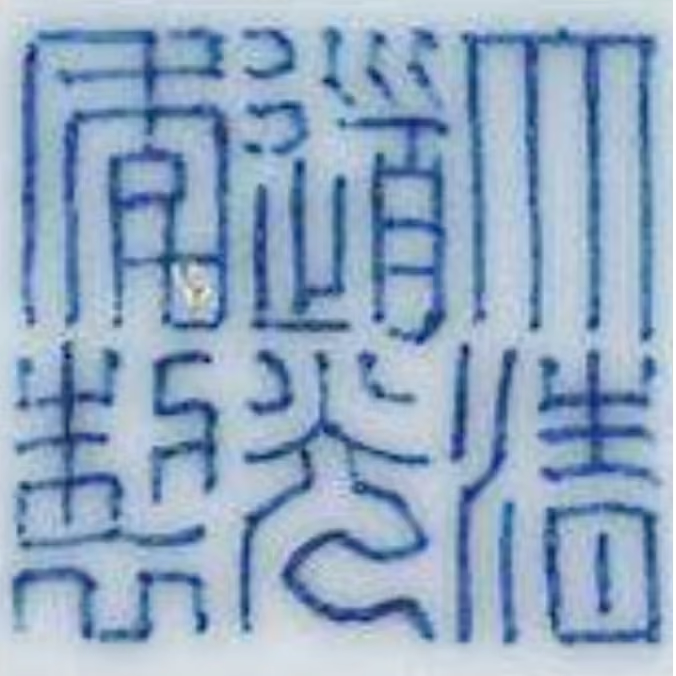
Reign marks are most commonly written in one of three scripts. The same characters look entirely different in each, and the layout of the mark is often influenced by the space available on the base of the bottle, where most snuff bottle reign marks are found.
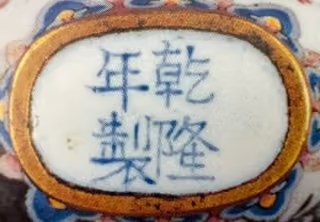
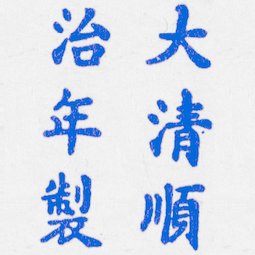
Clear, upright script characterized by precise, orderly strokes written within an imaginary square. Commonly used for official records and formal documents, it is valued for its legibility and is frequently found on a wide range of snuff bottle reign marks, including those on porcelain, enamel, and glass. Its handwritten appearance distinguishes it from both the print-like Fang Song Ti and the more decorative seal script.
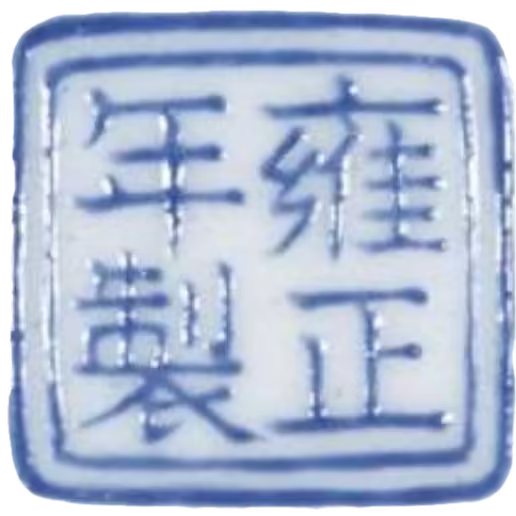
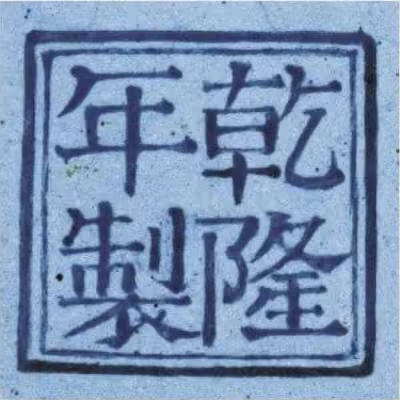
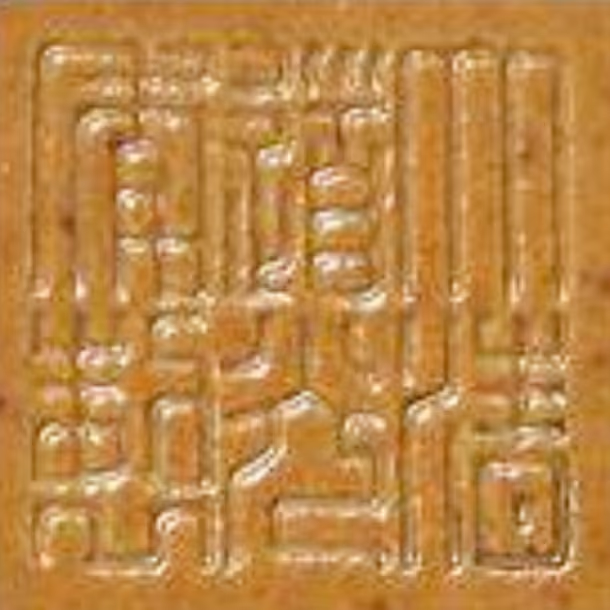
Distinctive, print-like script modeled after Song dynasty printed books, especially associated with enamel marks from palace workshops. Marks are often enclosed within a single or double square or circle, typically in blue or red enamel, with blue marks sometimes appearing in raised relief. Written by select craftsmen, its balanced, regular structure and unique appearance set it apart from both regular and seal scripts.
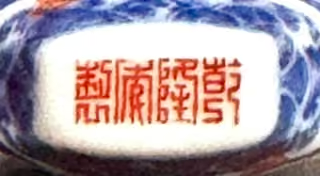
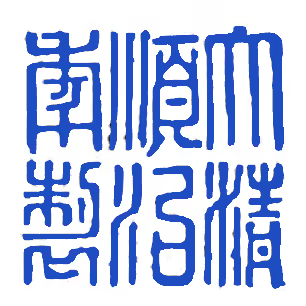
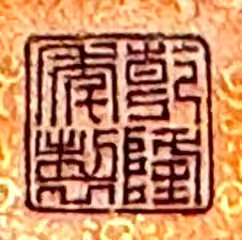
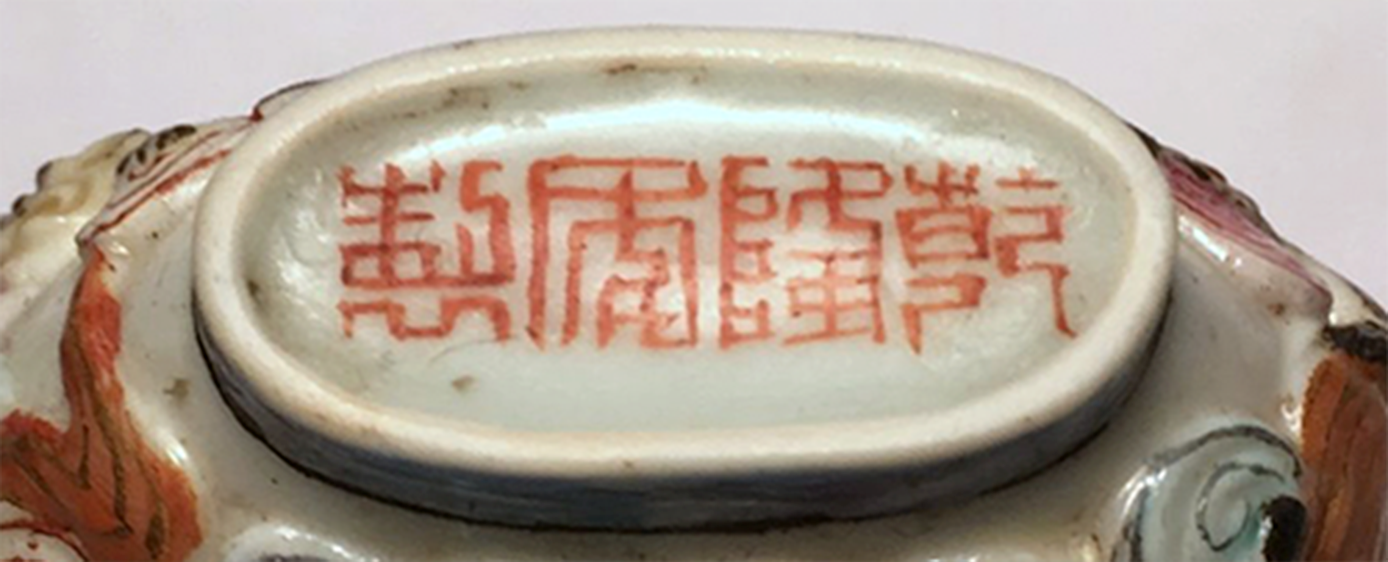
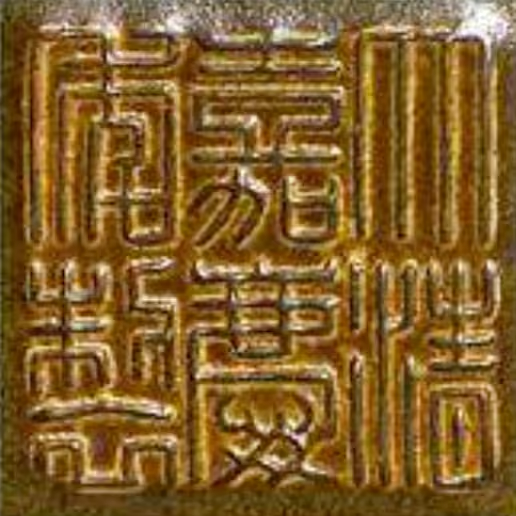
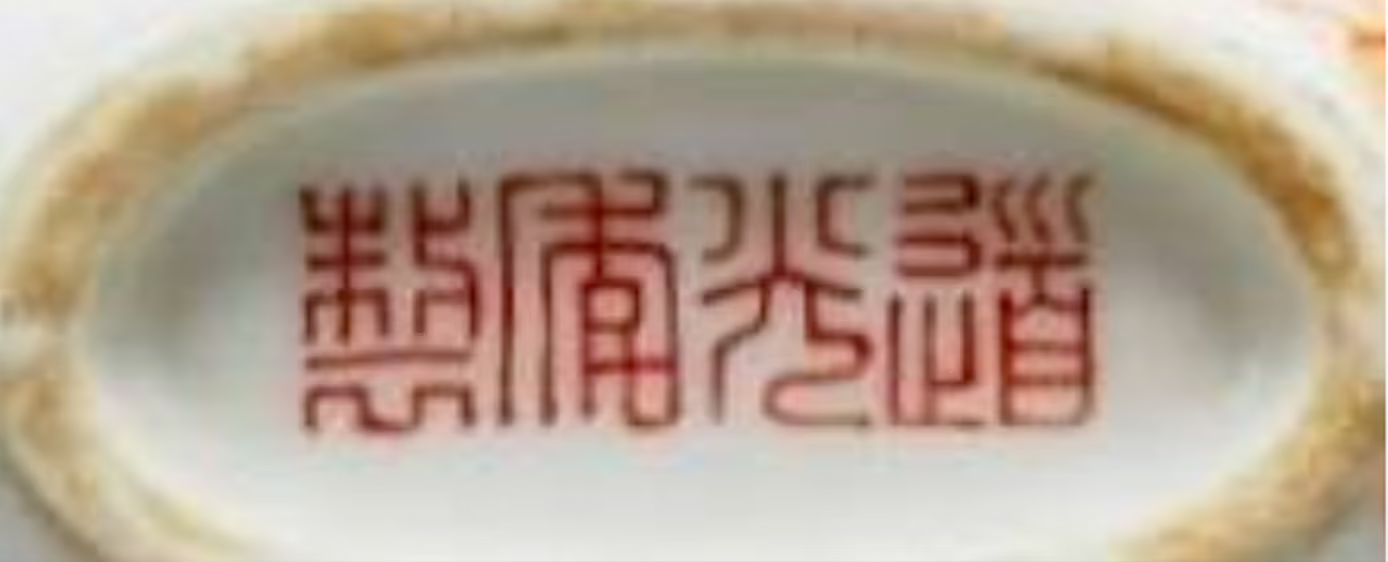
Archaic, decorative script with stylized, rounded forms that echo ancient Chinese inscriptions. Often used for six-character reign marks, especially on imperial wares, seal script is notable for its formal, ornamental quality and its connection to traditional Chinese calligraphy. Its distinctive, ancient appearance sets it apart from both the regular and Fang Song Ti scripts.
The Qing Reigns
Tobacco reached China in the late Ming, snuff-taking followed under the early Qing, and the snuff bottle grew into an art form across the dynasty. The reign names you will meet on marks are all Qing, running from Shunzhi and Kangxi at the start to Xuantong, the last, which ends in 1912. The marks outlived the dynasty, though: copied for generations, a Qing reign name can sit on a bottle made decades later.
Shunzhi
1644– 1661
Personal Name: Fulin
Objects bearing the Shunzhi mark are extremely rare: the court began ordering porcelain from private kilns only in the eighth year of the reign, and the imperial kiln began production in the eleventh. The metal bottles are disputed. Marks on Shunzhi porcelain in the Palace Museum, Beijing, and the National Palace Museum, Taipei, are consistently four or six characters in regular script, so any departure warrants real caution.
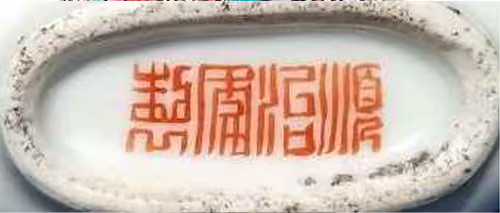
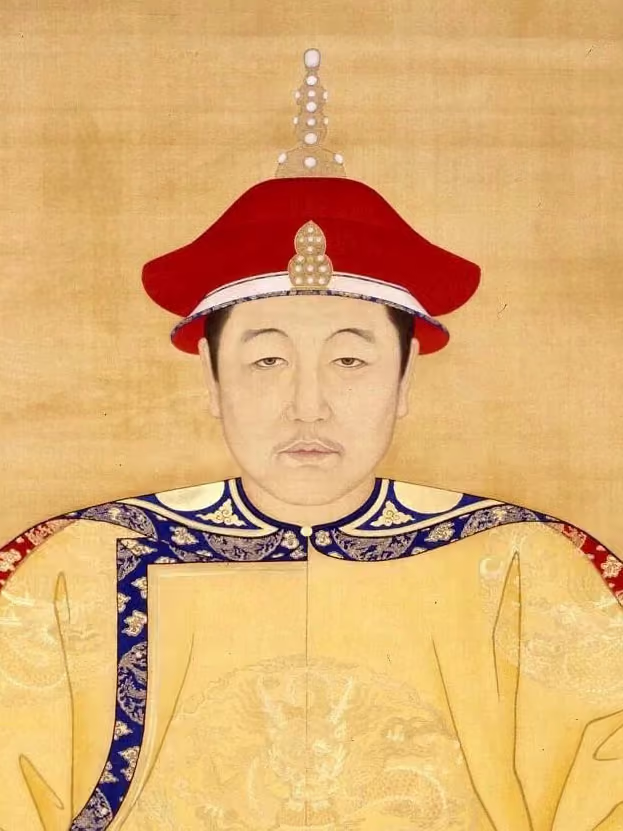
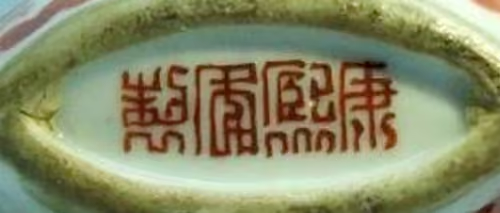
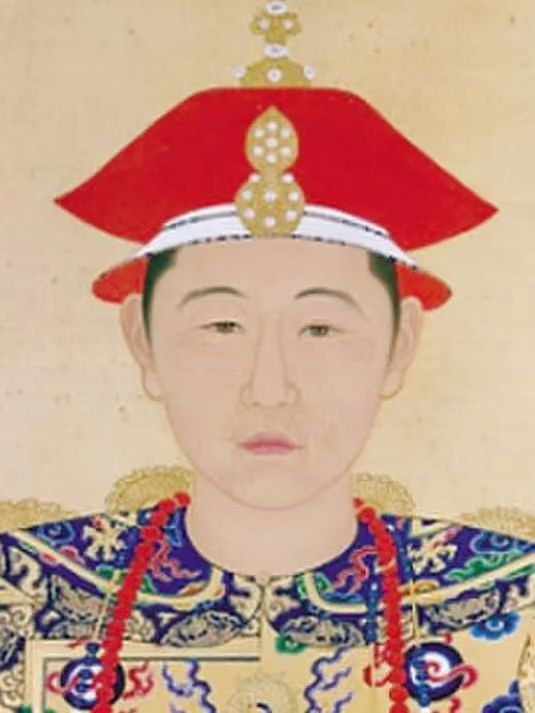
康熙
Kangxi
1662 – 1722
Personal Name: Xuanye
The reign when the snuff bottle comes into its own. Snuff-taking became fashionable at court by the early 1680s, glass established itself as the standard material, and the imperial glassworks opened in 1696 under European-trained masters. The workshops drew on Kangxi's interest in Western enamel, and early results were experimental. This is where a credible history of the snuff bottle begins, so a genuine Kangxi mark is early, uncommon, and worth close scrutiny.
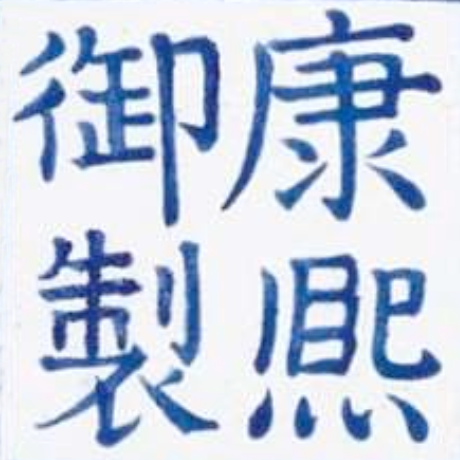
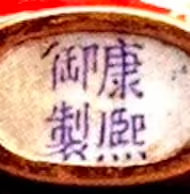
雍正
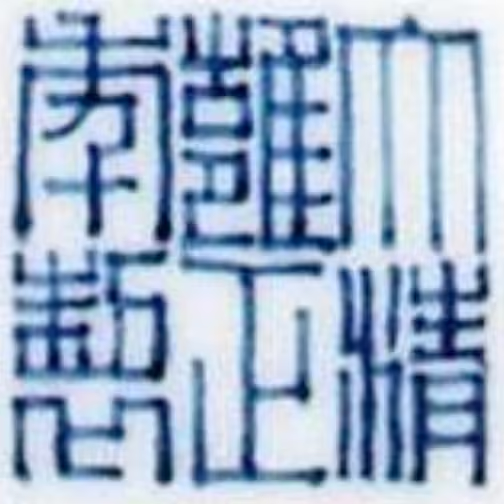
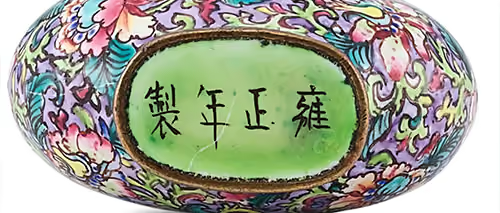
Yongzheng
1723 – 1735
Personal Name: Yinzhen
The reign when palace production comes into full force. The Imperial Workshops turned out over 3,000 snuff bottles, many as official gifts, in a wide range of materials, and enamelling was managed so closely that orders were logged as regular or festival work. The earliest known porcelain snuff bottle dates to these years. Standards were exceptionally high, so a genuine Yongzheng bottle is scarce, prized, and often imitated.
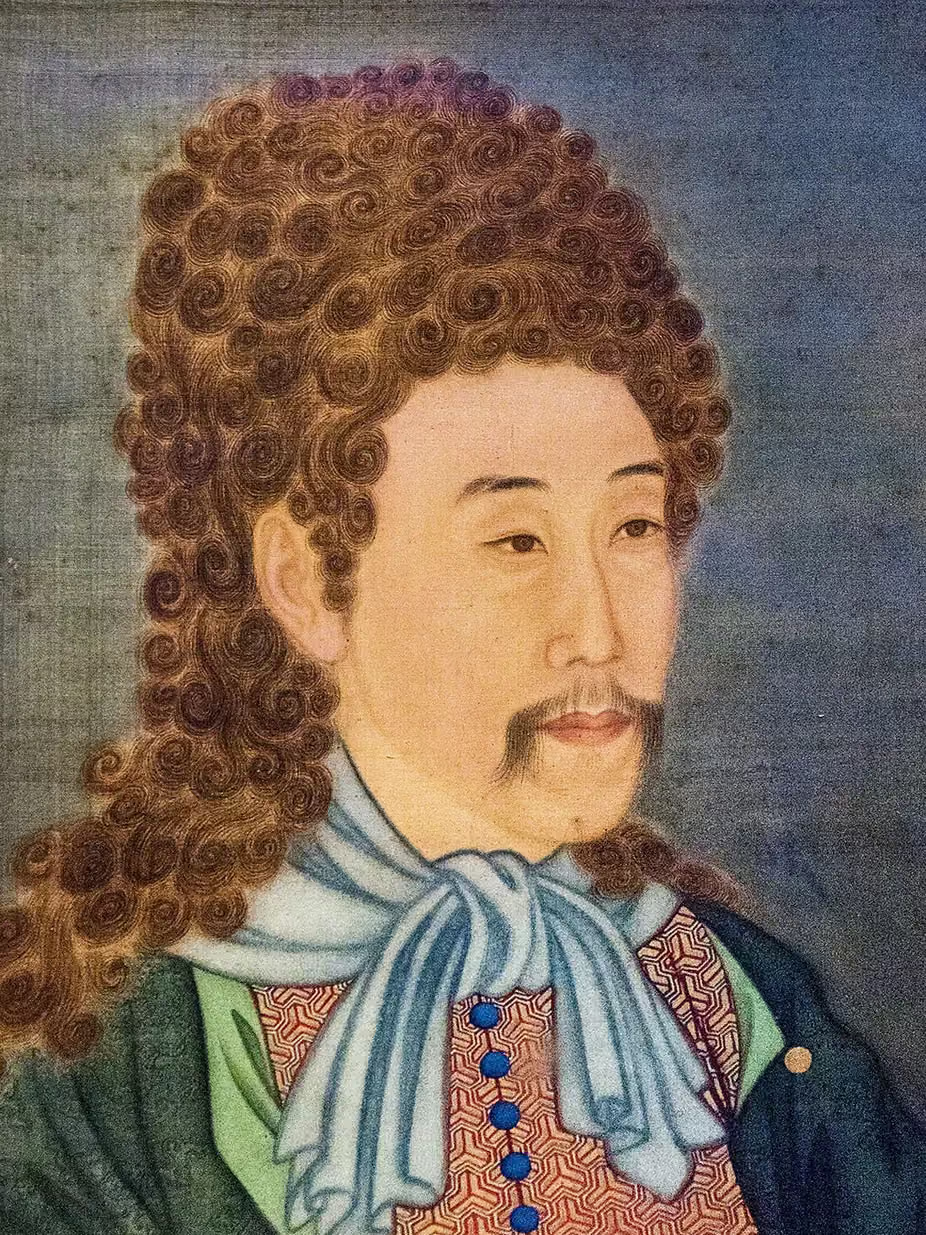
Qianlong
1736 – 1795
Personal Name: Hongli
The high point of the snuff bottle, and the most imitated mark of all. Qianlong was a relentless patron, and the palace workshops produced glass, enamel, porcelain, and jade works on a vast scale. In 1737, Qianlong ordered that porcelain reign marks be written in seal script. The Qianlong reign mark became byword for quality, leading to its continued use well past the Qianlong reign. It is the most common reign mark and the least reliable, so recognizing it is only the start. The bottle's material, workmanship, and wear decide its actual date.
嘉慶
Jiaqing
1796 – 1820
Personal Name: Yongyan
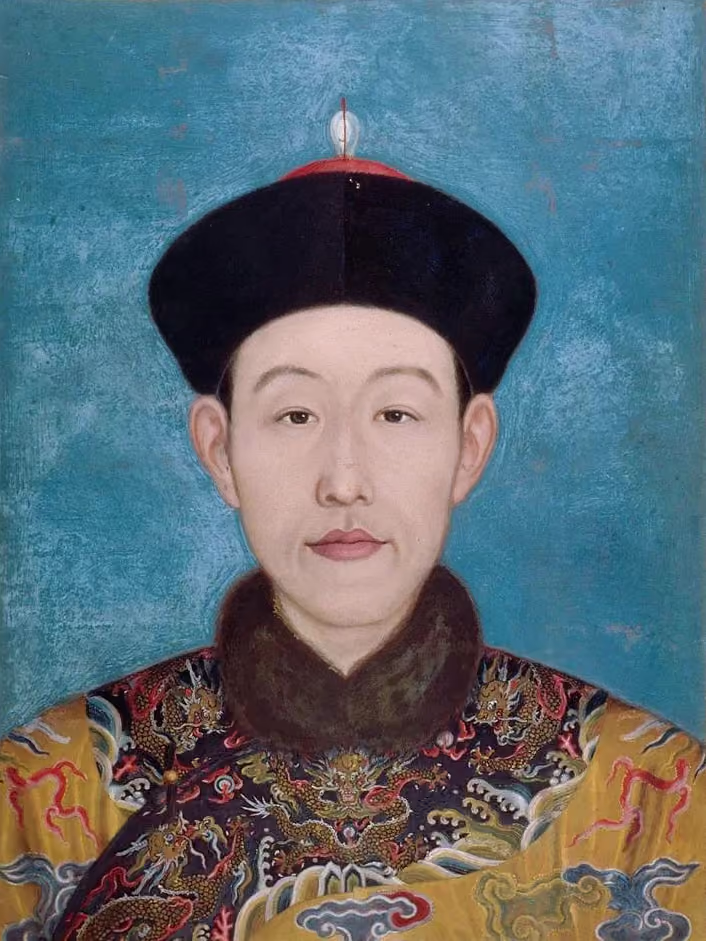
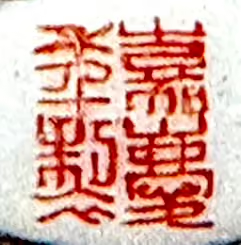
A transitional reign with real imperial output. Porcelain bottles were produced in quantity at the Jingdezhen kilns and given to officials and foreign envoys, while the court's dictated style began yielding to popular demand and a smaller strain of scholarly taste. Jiaqing marks are genuinely present, on porcelain in particular. The ‘Qianlong nian zhi’ reign mark continued to be used during the first four years of the Jiaqing reign while Qianlong was still living.
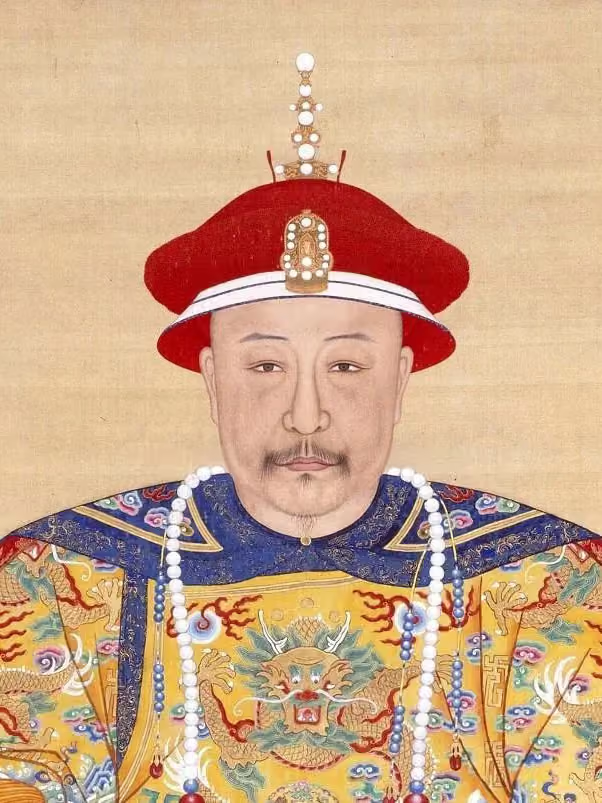
道光
Daoguang
1821 – 1850
Personal Name: Mianning
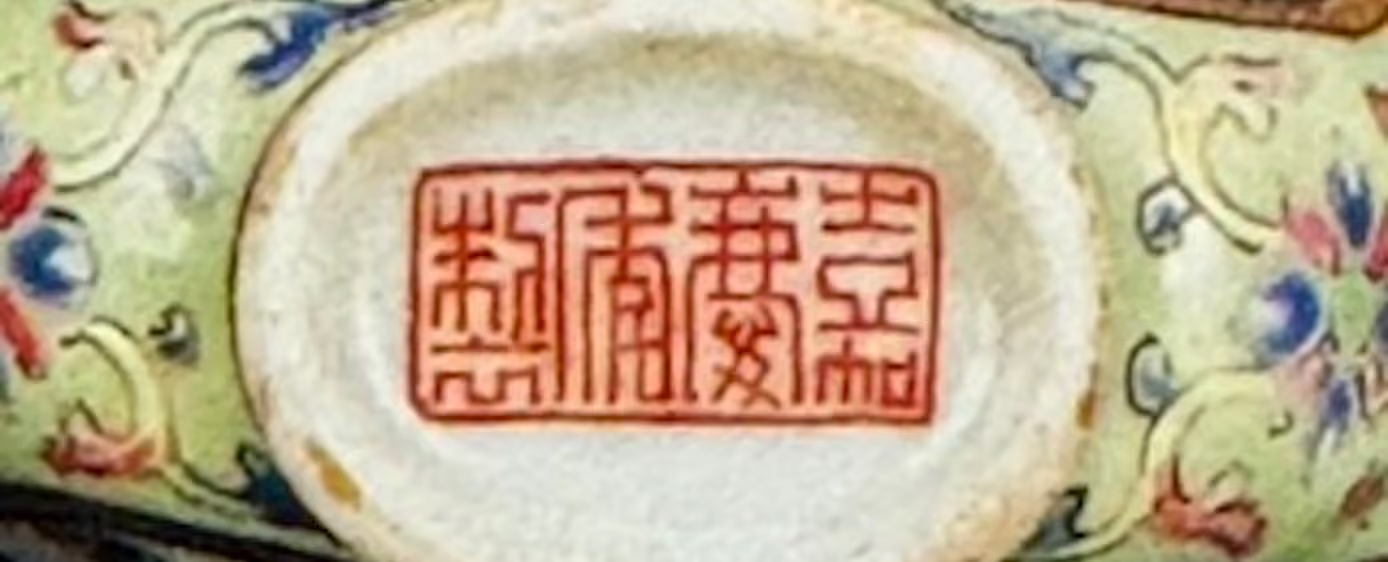
The reign of a hands-on emperor. Palace workshops made almost nothing beyond the imperial glassworks' annual run of glass bottles, and Daoguang shaped what was made, favoring pieces that sat well in the hand, well hollowed and wide of mouth. Porcelain from Jingdezhen carries much of the reign, its bottles bulkier and larger than before. Reign-marked examples hold up in quality, so the later flood of mediocre bottles is not the fault of this reign.
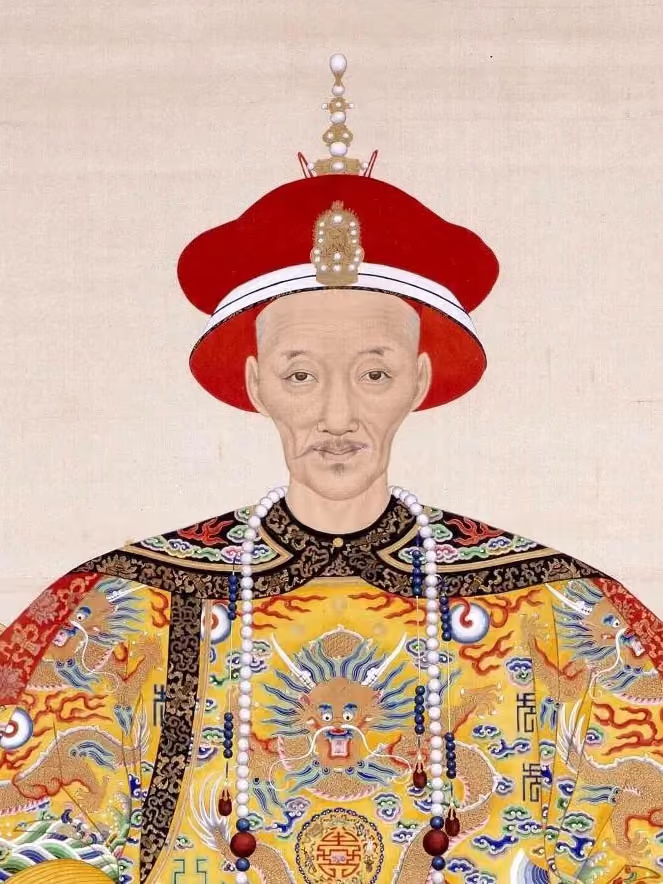
咸豐
Xianfeng
1851 – 1861
Personal Name: Yizhu
A reign consumed by crisis. The Taiping Rebellion and the Second Opium War drained the court, and the sacking of the Yuanmingyuan in 1860 fell within these years, so imperial production thinned and genuine reign-marked bottles are correspondingly uncommon. The imperial glassworks ran on at reduced capacity, private workshops took up more of the trade, and much of the output imitated earlier styles rather than breaking new ground. A Xianfeng mark is scarce, and the work it graces is usually plainer than the reigns before.
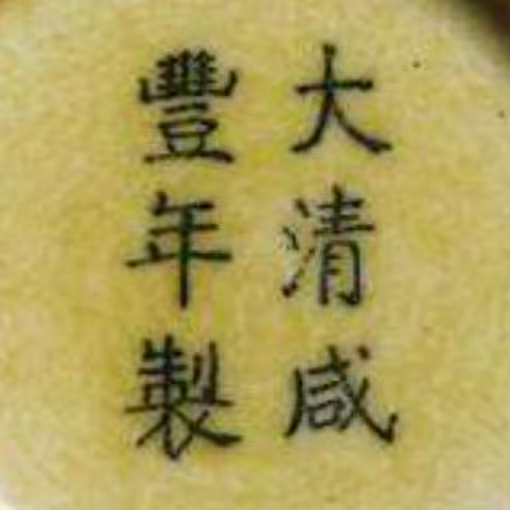
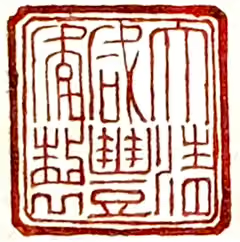
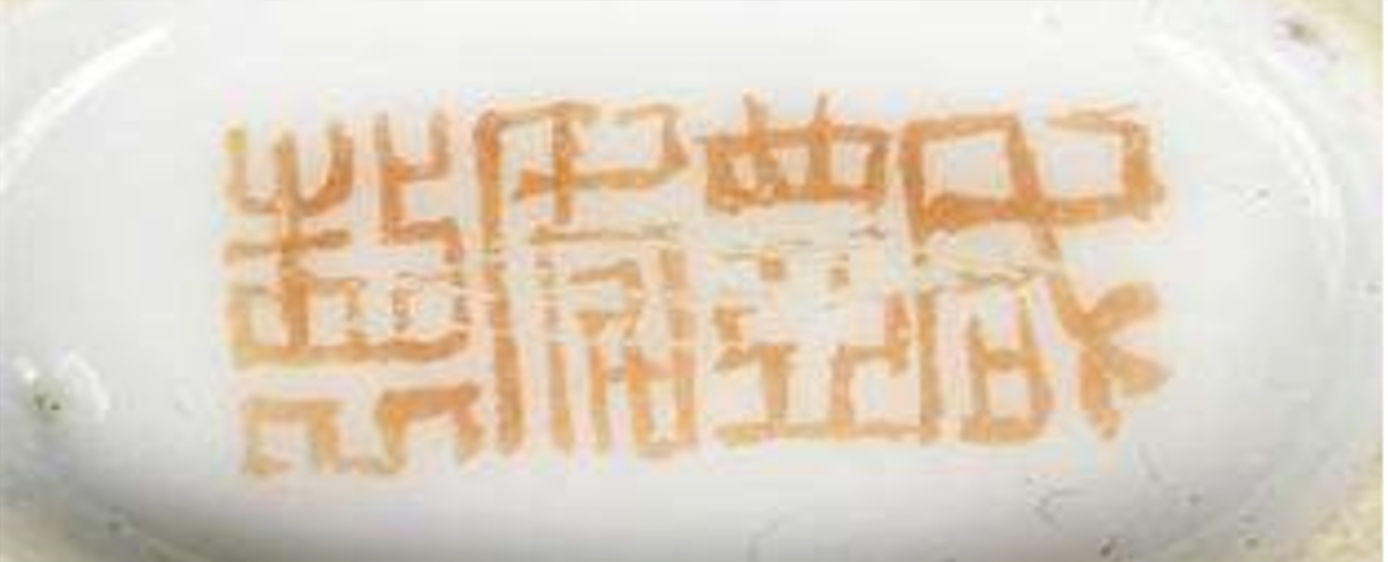
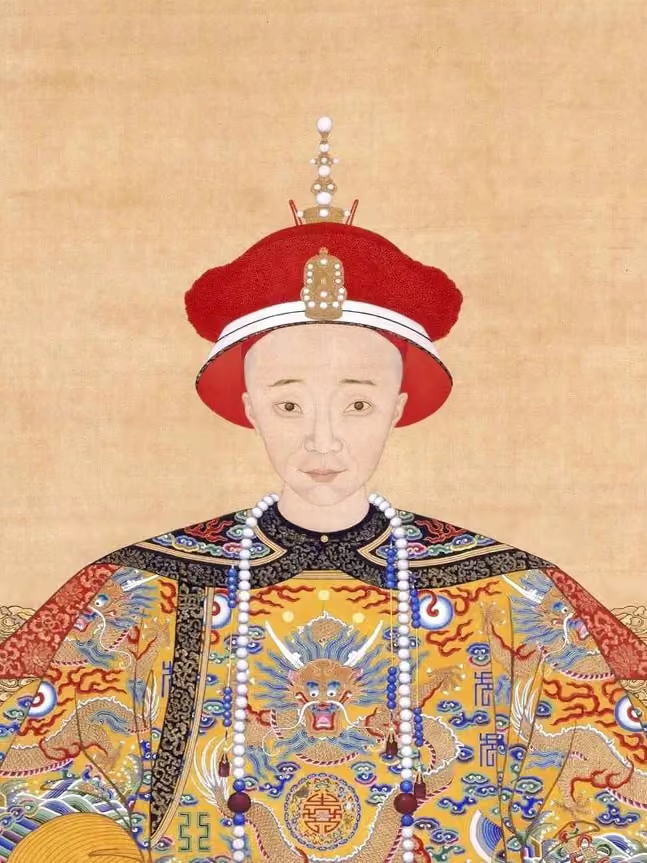
同治
Tongzhi
1862 – 1874
Personal Name: Zaichun
A reign of recovery. The Taiping Rebellion was not put down until 1864, and the imperial kiln at Jingdezhen, destroyed in the fighting, only reopened that year. Production then revived, led by monochrome porcelain bottles that were quick to make, modestly priced, and suited to a period that prized plainness and calm. The Tongzhi mark itself is seldom seen on snuff bottles, so genuine examples are relatively uncommon despite the broader revival.
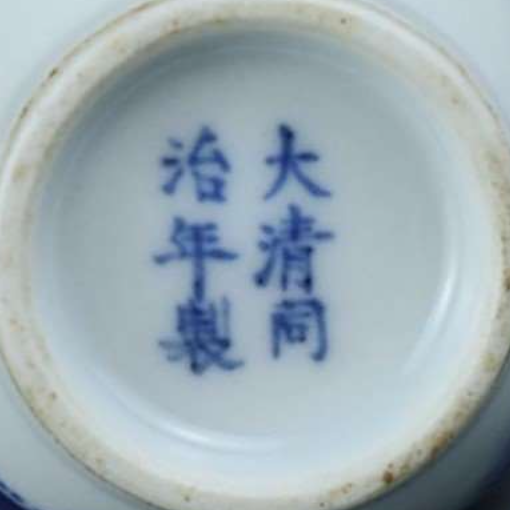
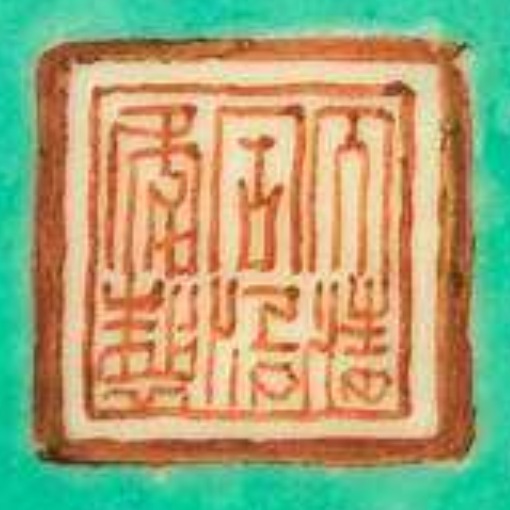
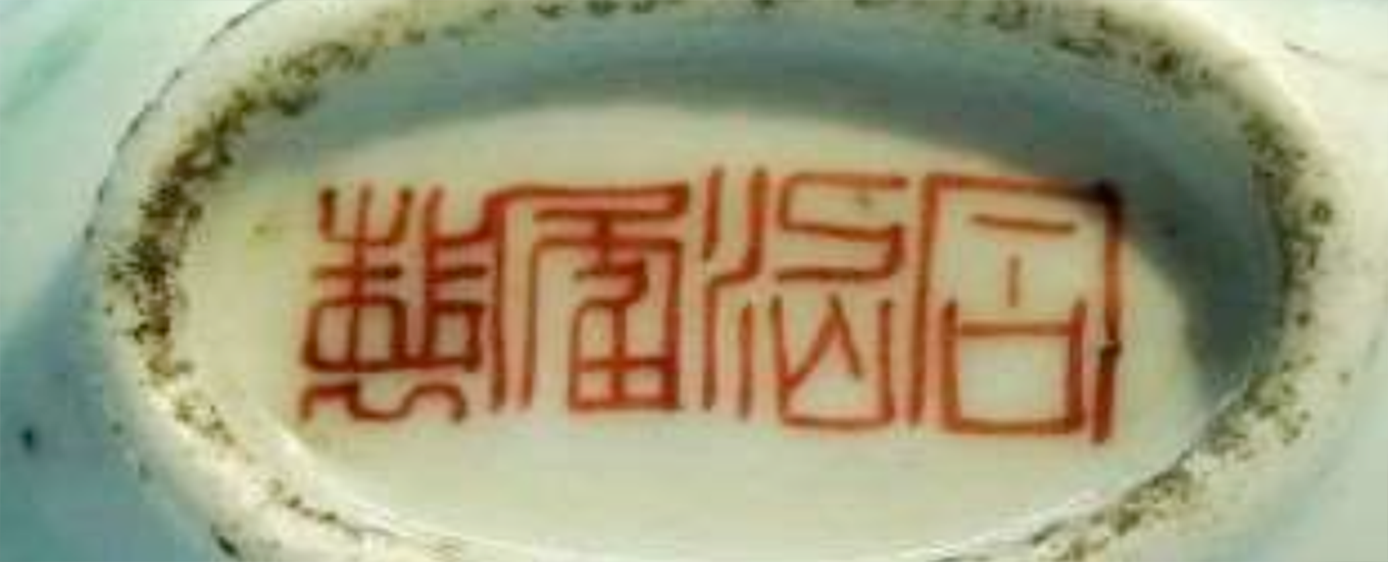
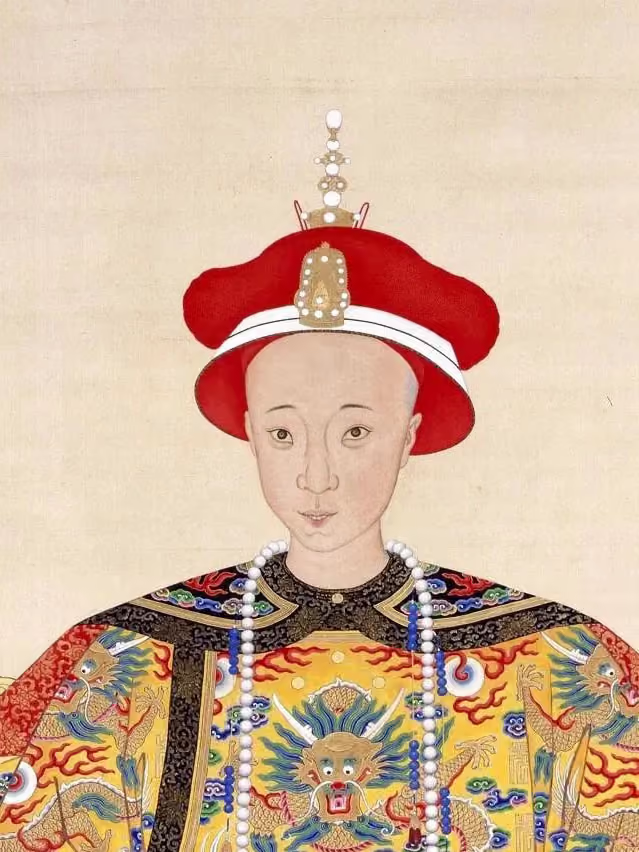
光緒
Guangxu
1875 – 1908
Personal Name: Zaitian
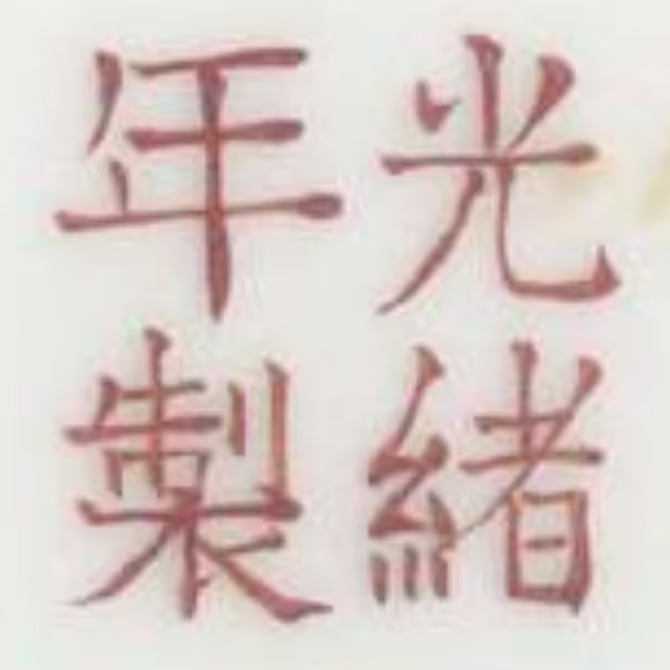
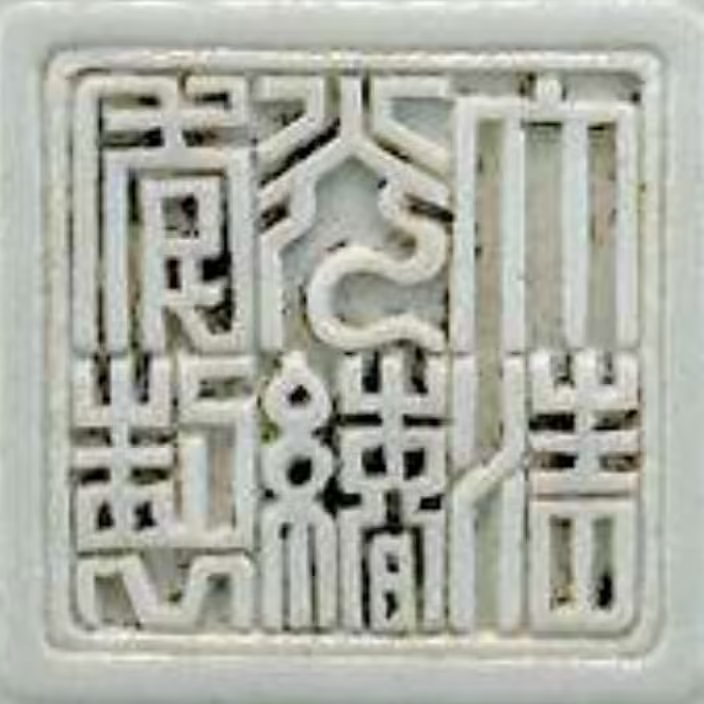
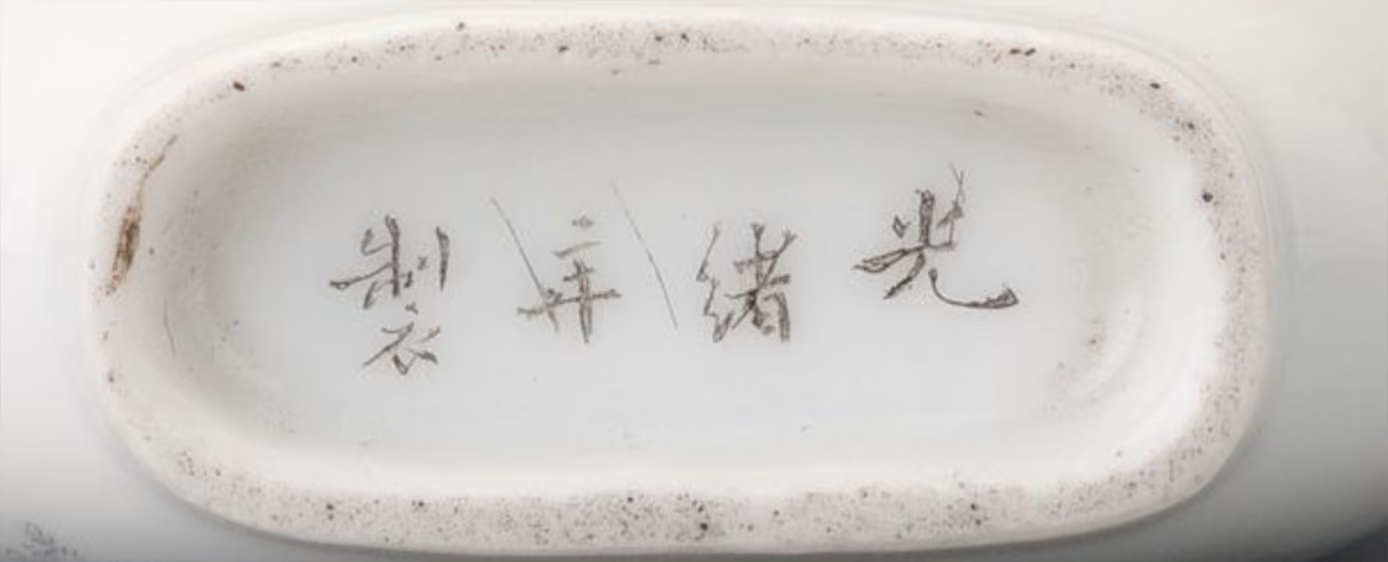
The last major reign for the snuff bottle. Both imperial and private workshops stayed active, and the inside-painted school came into its own, with Guangxu marks appearing on porcelain in particular. The best imperial glass of these years is so finely made that, stripped of its mark, it could pass for work a century older, though such quality was by now the exception. Marks vary in execution, and a poorly written Guangxu mark has turned up on a bottle of real quality, a reminder that the mark and the merit of a bottle do not always travel together.
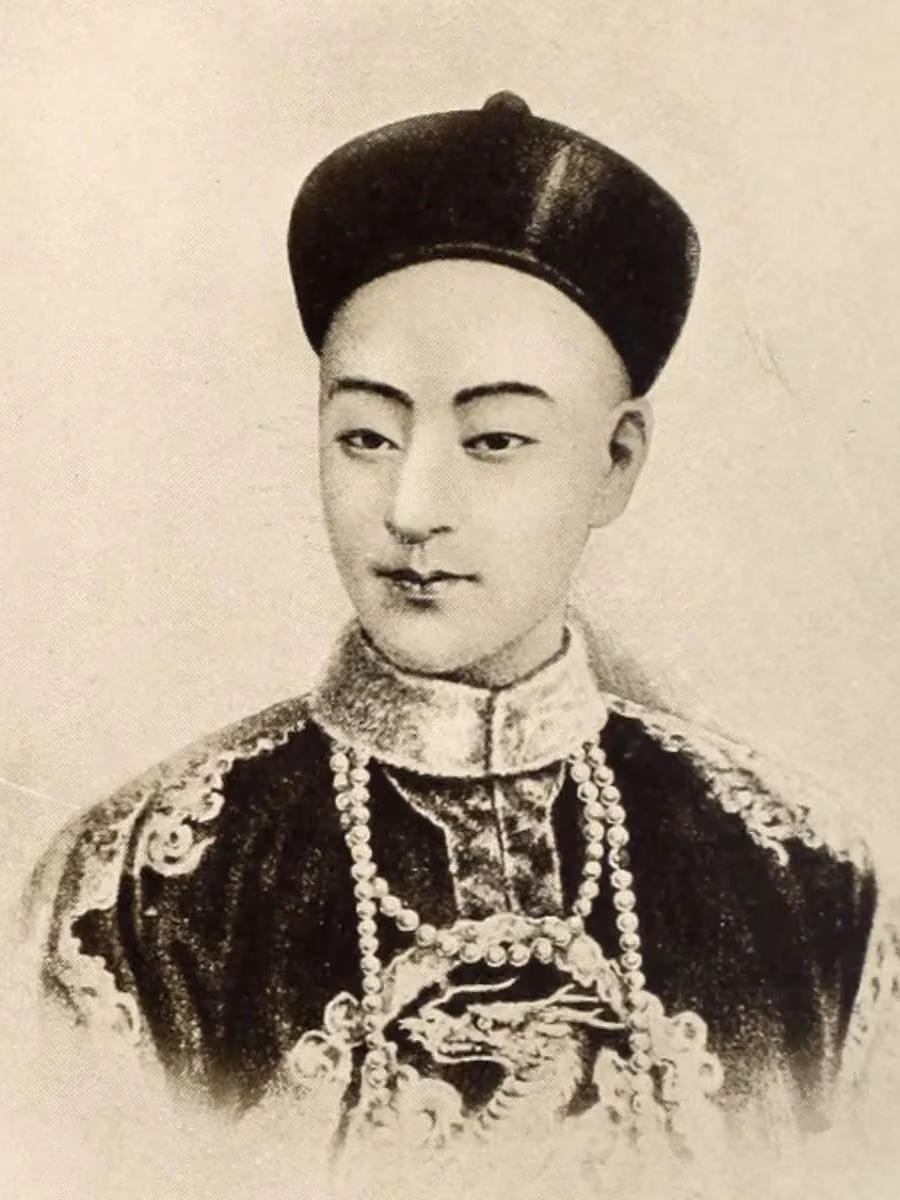
The End of the Imperial Tradition
The subject of reign marks turns unusual in the last Qing decades, which were dominated by the Empress Dowager Cixi. Regent from 1861, she held no reign name of her own, so no bottle bears a Cixi reign mark. Bottles from her decades of power, spanning the reigns of the two child emperors she ruled behind as regent, carry the mark of the reigning one, Tongzhi or Guangxu, and the porcelains she personally commissioned instead bear the studio mark Dayazhai (大雅齋), sometimes treated as her de facto imperial mark. In unsettled years a bottle might carry only Guan yao nei zao, "made in the official kiln," in place of any reign mark at all. Her revival of the kilns and the imperial glassworks accounts for much of the apparent flourishing marked Tongzhi and Guangxu.
The death of the Empress Dowager Cixi in 1908 marked the beginning of the last imperial reign: Xuantong, that of the child emperor Puyi, her great-nephew. It ran only to 1912, by which time imperial patronage had thinned to almost nothing, and most bottles bearing the mark were made for the commercial market in imitation of earlier work. Puyi's abdication ended the dynasty, and the reign closes the imperial snuff bottle tradition.
Though imperial reigns end in 1912, the reign marks continue. Through the Republic period, to 1949, production was wholly commercial, and large numbers of bottles were made in Qing style bearing Qianlong and other imperial marks on work with no connection to those reigns. A collector should expect that an imperial reign mark on a bottle of this period records homage or commercial convention, not the date of manufacture.
After 1949 the living tradition largely ended. Snuff-taking had all but disappeared and the imperial arts fell out of favor, so bottles were made only occasionally, as art objects or souvenirs. The revival since has been one of collecting and scholarship rather than use. The snuff bottle now survives as an object of study and trade, which is why a reign mark repays careful reading.
The Mark Does Not Date the Bottle
Reading the mark identifies it, but the mark does not date the bottle. A Qianlong mark does not make a bottle Qianlong, and many works display a reign mark earlier than the bottle's actual date. These apocryphal marks appear for one of three reasons:
- Homage – a workshop honoring an admired earlier reign.
- Convention – a quality signal applied almost by default, Qianlong above all.
- Deception – a mark meant to pass a bottle as older and dearer than it is.
The first two are honest, the third is not, and from the mark alone you cannot tell them apart.
What does date a bottle is the bottle itself: material and technique, the quality of hollowing and finishing, wear and patina, the period style, and in some instances the stopper. The mark is one data point among these—and usually the weakest—so treat every mark as a claim to be checked against the bottle. A reign mark that cannot be right for the material, technique, or style is a red flag, and that is the one thing a mark can tell you on its own.
The International Chinese Snuff Bottle Society
2 Hamill Road, Suite 353
Baltimore, MD 21210 USA
410-467-9400